
Published · Updated
Prebiotics vs probiotics comes down to one thing: probiotics are the live good bacteria you add to your gut, and prebiotics are the plant fibers that feed them. You get probiotics from fermented foods and supplements, and prebiotics from foods like onions, garlic, oats, and bananas. Both may support a healthy gut, and they work best together.
If you have ever stood in the supplement aisle holding two bottles and wondering what the difference actually is, you are not alone. Prebiotics. Probiotics. They sound almost identical, and the labels do not always help.
I used to lump them together too. Then I started reading, because I like to understand what I am putting in my body before I spend money on it. Once it clicked, it stayed clicked. So let me save you the homework and break it down the way I wish someone had done for me.
Here is the short version. Probiotics are the good bacteria. Prebiotics are the food that feeds them. That is the whole idea in one sentence. Everything else is just detail.
Let’s Break It Down
Think of your gut like a garden. I can say this with a straight face because I have been gardening for close to ten years, and the comparison holds up better than most.
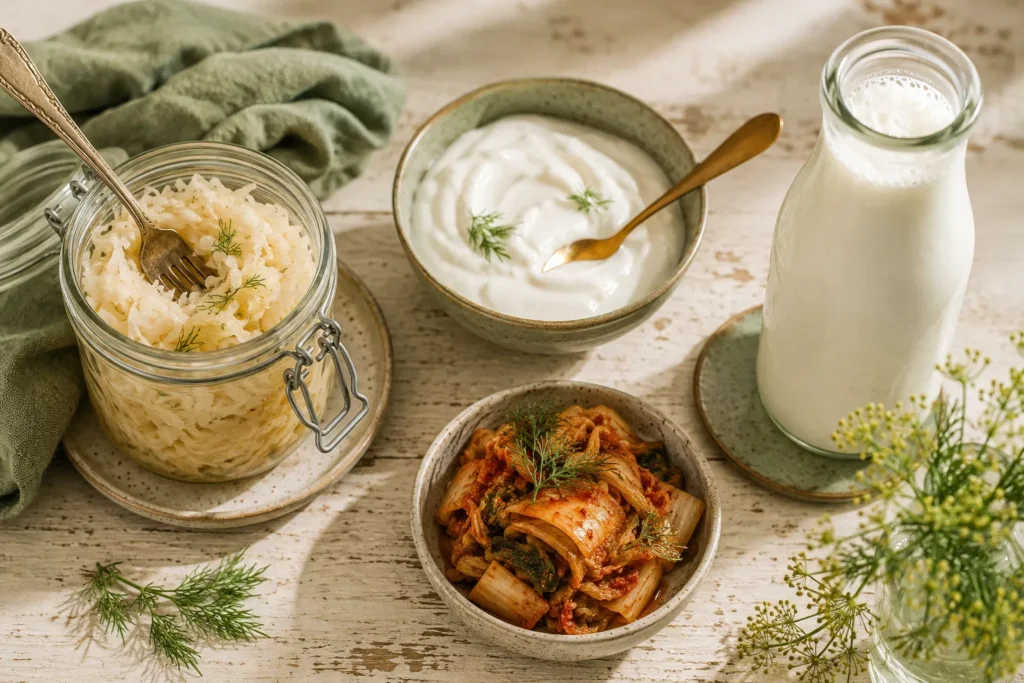
Probiotics are the seeds and the living plants. They are the beneficial microbes you want thriving in there. When you take a probiotic supplement or eat something like yogurt, kefir, or sauerkraut, you are adding live bacteria to the mix.
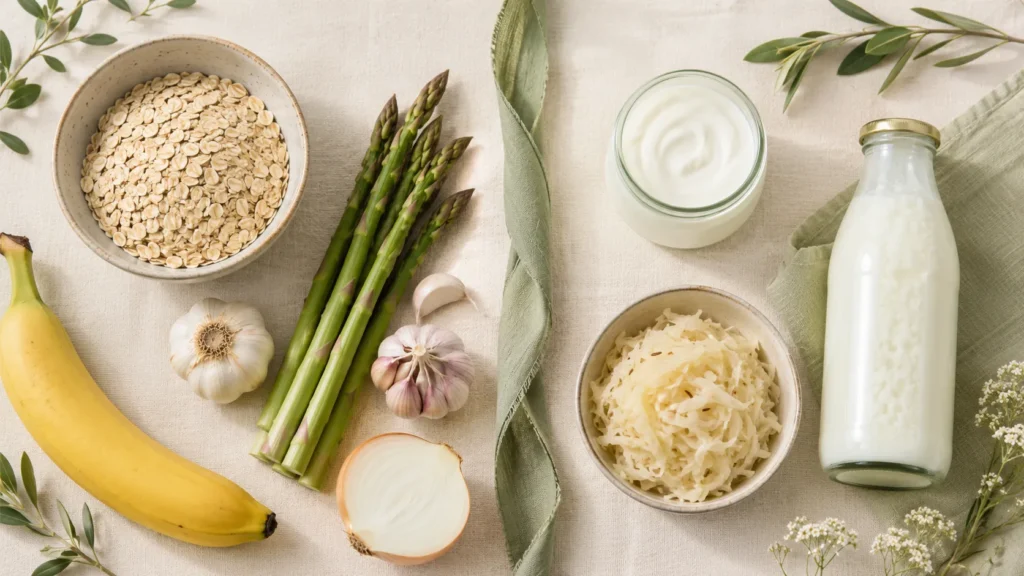
Prebiotics are the compost and the water. They are not alive. They are the fibers and plant compounds that the good bacteria feed on so they can grow and do their job. You get prebiotics from foods like onions, garlic, oats, bananas, asparagus, and leeks.
A garden with great plants and no water does not do much. And water with no plants does not either. You want both working together. That is really the heart of prebiotics vs probiotics.
How Do Prebiotics and Probiotics Work Together?
Your gut is home to trillions of bacteria. Some are helpful, some are not, and the goal is keeping the helpful ones in the majority.
When you feed the good bacteria with prebiotic fiber, they grow stronger and can crowd out the less friendly stuff. As they break that fiber down, they may produce compounds that support your gut lining and your everyday digestion.
Probiotics add reinforcements to that friendly population. Prebiotics keep those reinforcements fed. When you take them together, some people call that a synbiotic. Fancy word, simple idea. It just means the food and the bacteria arrive as a team.
You do not need to overthink the science. You just need to remember that one adds the good guys and the other feeds them.
Want the deeper dive on why gut health matters in the first place? I keep our gut resources together in the Gut Health collection.
Where Do I Get Mine?
I am a food-first guy, always have been. When I dropped over 70 pounds, the biggest shift was not a pill. It was learning to enjoy real food.
These days I just found food I actually enjoy. Steak, eggs, fresh veggies, cottage cheese, and yes, pickles. Real fermented pickles are one of those quiet little wins for your gut, and they taste like something my grandfather would have kept in the cellar.
So I lean on food first. Garlic and onions in almost everything I cook. Oats in the morning. A little something fermented most days. That covers a lot of ground before any bottle enters the picture.
But here is where a supplement earns its spot. Food can be inconsistent. Life gets busy, you travel, you eat out, and some days your plate just does not have much fiber or fermented anything on it. That is when a quality probiotic helps me stay steady.
I take our Probiotic 60B with MAKTREK because the delivery system is built to help more of those live cultures actually survive the trip and reach your gut. High-potency probiotics that do not make it where they are going are not doing you much good. You can read the full breakdown on the Probiotic 60B product page.
What The Research Actually Says
I am not going to oversell this, because the honest picture is more useful than the hyped one.
The distinction between the two is well established. Probiotics are defined as live microorganisms that, when taken in adequate amounts, may confer a health benefit, while prebiotics are the complex carbohydrates that feed those microbes (source: NIH Office of Dietary Supplements, Probiotics Fact Sheet).
The research also suggests cautious optimism rather than a cure-all. Certain probiotic strains appear to show modest benefits for some digestive concerns, but experts note that more high-quality clinical trials are needed to pin down the best strains and doses (source: NIH Office of Dietary Supplements, Probiotics Fact Sheet).
On the prebiotic side, reviews point out that feeding your beneficial bacteria with fiber-rich foods may support a healthier balance in the gut, though effects vary from person to person (source: Effects of Probiotics, Prebiotics, and Synbiotics on Human Health, PMC5622781).
The takeaway I trust. Both may support a healthy gut, especially together, but they are support, not magic. Anyone who promises you a miracle is selling something I would not buy.
Simple Ways To Start
You do not need a complicated plan. Start with these.
Eat the rainbow of plants. Onions, garlic, oats, bananas, and leafy greens bring prebiotic fiber without any effort beyond cooking dinner.
Add something fermented. Plain yogurt, kefir, sauerkraut, kimchi, or real pickles a few times a week.
Consider a probiotic when your food is inconsistent. This is where a supplement fills the gaps on your busy weeks.
Give it time. Your gut did not shift overnight and it will not turn around overnight either. Think in weeks, not days.
If you would rather have a simple routine handed to you instead of piecing it together, grab my free starter guide, the Supplement Starter Guide.
The Bottom Line
Prebiotics vs probiotics is not a competition. It never was. Probiotics are the good bacteria. Prebiotics are their food. You want both, and the easiest way to get them is real food first with a quality probiotic to fill the gaps.
Keep it simple, be consistent, and be patient with yourself. Your gut is doing a lot of quiet work for you every single day. Feeding it well is one of the kindest things you can do for your whole body.
These statements have not been evaluated by the FDA. This product is not intended to diagnose, treat, cure, or prevent any disease.
Frequently Asked Questions
Can I take prebiotics and probiotics together?
Yes, many people take them together, and the combination is sometimes called a synbiotic. The prebiotic fiber feeds the probiotic bacteria, so they support each other. Pairing a quality probiotic with prebiotic-rich foods is a simple way to cover both.
Do I need both prebiotics and probiotics?
They do different jobs, so having both is ideal. Probiotics add friendly bacteria and prebiotics feed them. You can get plenty from food first, then use a supplement to fill gaps on busy weeks.
What foods contain prebiotics and probiotics?
Prebiotics show up in onions, garlic, oats, bananas, asparagus, and leeks. Probiotics come from fermented foods like yogurt, kefir, sauerkraut, kimchi, and real pickles. Eating a mix of both most days is an easy starting point.
How long does it take to notice a difference?
Give it a few weeks rather than a few days. Your gut shifts gradually, so consistency matters more than speed. Think in terms of steady daily habits over several weeks.
Are prebiotics and probiotics safe to take every day?
For most healthy people, daily prebiotic foods and a quality probiotic are gentle and sensible. Add fiber slowly and drink water to stay comfortable. If you have a health condition or take medication, check with your doctor first.
If this helped you, share it with someone who needs it, or shoot me a message and let’s talk!
