

Published
Small wellness habits that compound are the whole idea behind National Wellness Month, as far as I’m concerned: small habits, repeated for a long time, beat big overhauls almost every time. Here are the 5 that actually moved the needle for me.
The Math Behind Small Wellness Habits That Compound
Here’s the mindset shift that matters more than any single habit: losing just 2 pounds a week for a year is 104 pounds. Nobody’s brain is built to feel how big that is week to week, because 2 pounds feels like nothing. But small changes add up fast when you let them run.
Researchers studying habit formation have found that repeating a behavior consistently, not willpower alone, is what makes it automatic over time (see the European Journal of Social Psychology’s habit-formation study for the research). That’s the whole idea behind National Wellness Month, as far as I’m concerned. Not a 30-day reset. Not a dramatic before-and-after. Just small wellness habits that compound, small enough to survive a bad week, done consistently enough that they add up.
Why “Small and Boring” Beats “Big and Dramatic”
Even now, years into this, I still catch a glimpse of myself in the mirror sometimes and see the old me, the 277-pound guy who nearly ended up back in a hospital bed. It’s a strange feeling. My body changed faster than my brain caught up. What actually got me from there to here wasn’t one big decision. It was a stack of small ones, repeated so many times they became who I am instead of something I “do.” If you want the full version of that story, I wrote it out on my Founder Story page.

Habit 1: Find the Movement That Doesn’t Feel Like Cardio
This one’s a bit of a double-edged sword for me. I stay pretty active all summer just taking care of the garden and doing yard work, so a lot of my movement happens without me ever “working out.” But here’s the real trick: I hate cardio. Always have. What I don’t hate is basketball. Chasing down my own misses, working on lay-ups, messing around with different moves. It’s cardio, technically, but it doesn’t feel like cardio, it feels like fun. That’s the whole point of this habit. Find the version of movement that tricks your brain into not counting it as exercise, and you’ll actually keep doing it.
Habit 2: Know What’s Actually in Your Food
The moment that changed the most for me wasn’t stepping on a scale. It was reading ingredient labels and actually understanding what I was looking at. The more I learned about what was in processed food, the less I wanted it near my body. Eating clean stopped feeling like a diet and started feeling like basic self-respect. That shift in understanding is a habit you build once and keep for life. Our Supplement Glossary is a good place to start if ingredient labels still feel like a foreign language.
Habit 3: Build a Few Meals You Never Get Tired Of
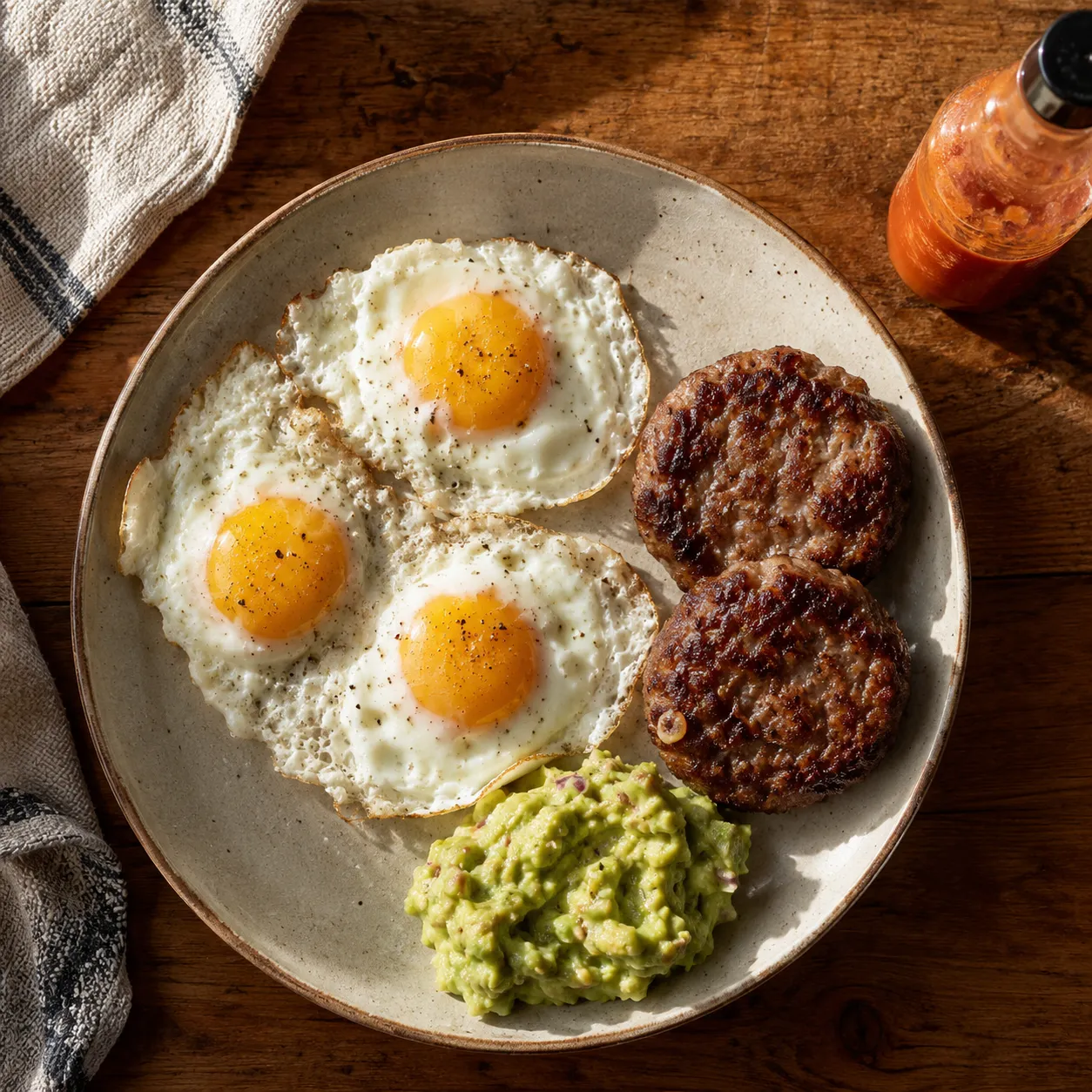
Forget trying to make every meal perfect. What actually works is having a small handful of meals that are quick, easy, and healthy enough that you don’t dread making them again. My breakfast most days is 3 eggs, 2 sausage patties, a small side of guacamole, and hot sauce. Quick, easy, and it keeps me full until late afternoon. That’s it. I’m not reinventing it every morning, and that’s exactly why it works.
This is one of those small wellness habits that compound fastest, since it removes a decision you make every single day. Pick a couple of meals like that for yourself, ones that are simple enough to make without thinking and satisfying enough that you actually want to eat them again.
Habit 4: Take Sleep More Seriously Than You Think You Need To
This is the one that surprised me the most. On the stretches where I actually got more sleep than I normally do, everything else got easier, cravings were quieter, workouts felt lighter, and my mood was more even without me trying. It wasn’t subtle. Sleep isn’t just “rest,” it’s the thing that makes every other habit on this list easier to stick to. If you’re white-knuckling your way through diet and exercise while running on five hours of sleep, sleep is probably the actual bottleneck, not willpower. If sleep is where you’re struggling most, grab our free 7-Night Sleep Checklist, it’s the same starting point I’d point a friend to.
Habit 5: Track Progress You Can Actually See
Not a scale number, necessarily. A pair of jeans that fit differently. A hike that used to wreck you and doesn’t anymore. This is exactly the kind of thing small wellness habits that compound eventually produce. Progress shows up in places besides the number, and noticing it is what keeps you going on the weeks the number doesn’t move. I go into this in a lot more detail in How I Rebuilt My Daily Routine After Losing 80 Pounds, if you want the longer version of how these habits actually stack over time.
Frequently Asked Questions
Do I need to start all 5 habits at once?
No. Pick one. Build it until it’s automatic, usually a few weeks, then add the next one.
What if I miss a day?
Miss a day. That’s not a failure, it’s just a day. The whole point of small habits is that one missed day doesn’t undo them.
Do supplements count as a “habit” here?
They can be part of the stack, but they support the work, they aren’t the work. Real food, movement, and consistency do the heavy lifting.
How long until small habits actually compound into something noticeable?
For most people, a few months of consistency with small wellness habits that compound starts showing up in how you feel, and closer to 6 months to a year for it to show up everywhere else too. Individual results vary.
These statements have not been evaluated by the FDA. This product is not intended to diagnose, treat, cure, or prevent any disease.
If this helped you, share it with someone who needs it, or shoot me a message and let’s talk!
