

Published · Updated
The short answer: A nutrient deficiency means your body is running low on something it needs, like magnesium, B12, or vitamin D. It usually builds slowly and improves when the gap is filled through food and targeted support. A health condition tends to arrive suddenly or persist no matter what your habits are, and it needs a doctor’s diagnosis, not a supplement. Many people deal with both at once, which is why it’s worth understanding the difference.
Not every symptom is nutritional. If you’re experiencing sudden fatigue, dizziness, pain, numbness, or neurological changes, always consult a licensed doctor first.
This article isn’t medical advice. It’s personal experience and helpful insight into the difference between needing support and needing a diagnosis.
Let’s Break It Down
I remember feeling completely worn out. Brain fog, cramping, restless sleep, and zero motivation. I thought maybe I was just aging badly, or something was “off” in my brain.
But it wasn’t a condition. It was a nutrient gap.
(Updated July 2026 with current testing info and my latest routine.)

What Is a Nutrient Deficiency, Really?
A nutrient deficiency means your body is running low on something it needs, like magnesium, B12, vitamin D, iron, or omega-3s.
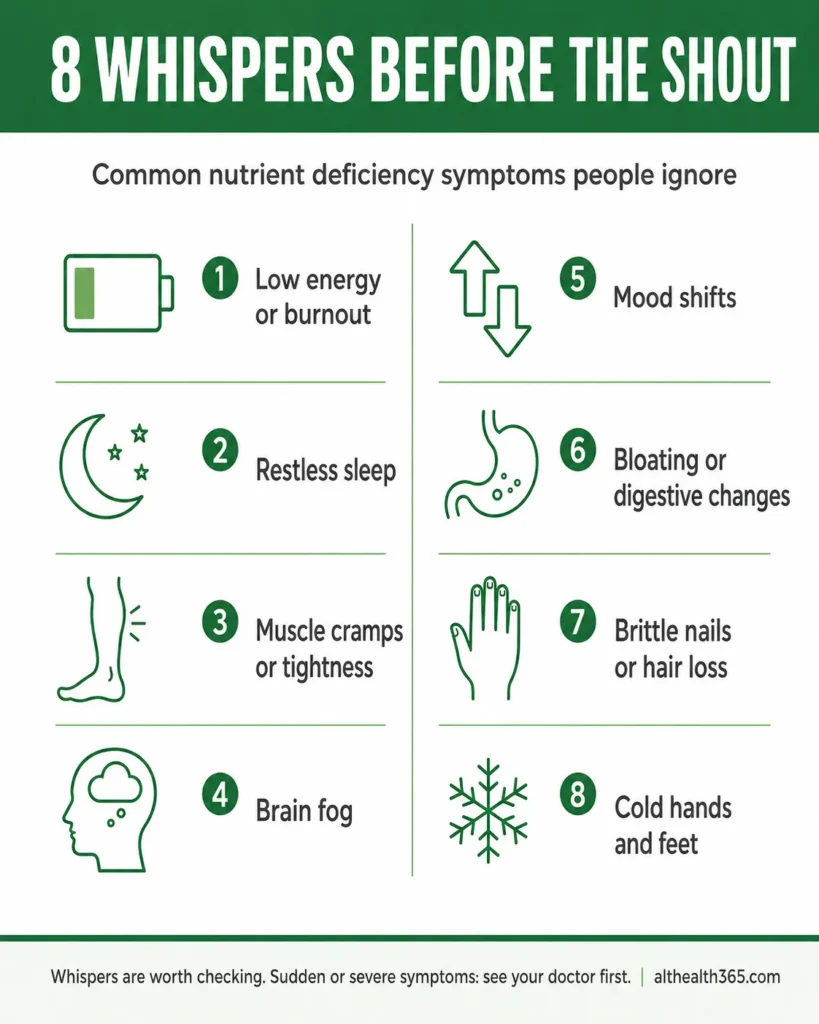
And because your body is smart, it starts “whispering” symptoms before it shouts.
Those whispers? Most people ignore them.
Common Nutrient Deficiency Symptoms
These symptoms are often brushed off, or chalked up to stress and age:
- Low energy or burnout
- Restless sleep or trouble staying asleep
- Muscle cramps, twitching, or tightness
- Brain fog, forgetfulness, or slow thinking
- Mood shifts or irritability
- Digestive changes (bloating, constipation)
- Hair loss, brittle nails, or dry skin
- Cold hands and feet
Common nutrient gaps in the U.S. include magnesium, B12, vitamin D, and iron (source: NIH).
Nutrient Deficiency vs Health Condition
| Nutrient Deficiency | Health Condition | |
|---|---|---|
| How it starts | Gradual, builds over weeks or months | Often sudden, severe, or persistent |
| Pattern | Worse with poor food, sleep, or stress; better with a cleaner routine | Constant regardless of habits |
| What helps | Often improves with better food and targeted support | Needs a medical diagnosis and treatment plan |
| How to check | Micronutrient testing, food and symptom tracking | Doctor-ordered exams and diagnostics |
Pro tip: You can have both. It’s worth checking for gaps before assuming the worst, and it’s worth seeing your doctor before assuming it’s “just” a gap.
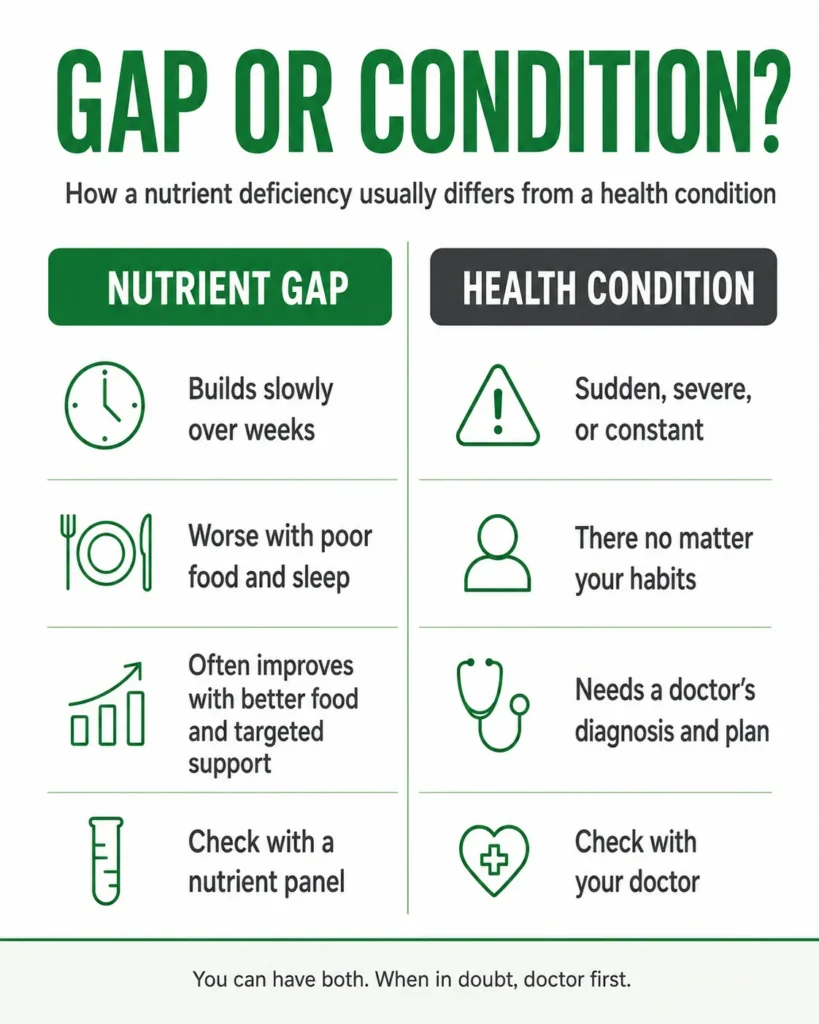
| Nutrient Gap | Health Condition |
|---|---|
| Builds slowly over weeks | Sudden, severe, or constant |
| Worse with poor food and sleep | There no matter your habits |
| Often improves with better food and targeted support | Needs a doctor’s diagnosis and plan |
| Check with a nutrient panel | Check with your doctor |
You can have both. When in doubt, doctor first.
My Story: From Fog to Fuel
I used to think I had adrenal fatigue or some mystery illness. I’d wake up groggy, hit a 2pm wall, and toss all night long.
I cleaned up my food and started supplementing smart: magnesium glycinate, B12 drops, and sea moss. Slowly, my body woke up again.
Not overnight. But day by day, I felt like me again.
How to Tell If It’s a Deficiency
Ask yourself:
- Did this develop slowly?
- Do symptoms get worse when I eat poorly or sleep less?
- Do I feel better when I clean up my routine?
- Have I had micronutrient testing, not just basic labs?
Bloodwork tip: Serum tests measure what’s in your blood right now. Intracellular tests show what’s actually inside your cells, which is often a better picture of what your body can use. Ask your doctor about a full-spectrum nutrient panel at your next physical.
Helpful reading: NIH Magnesium Fact Sheet and the Mayo Clinic’s vitamin B12 overview.
Important: Don’t Supplement Blindly
Just because something is natural doesn’t mean more is better.
High doses of certain nutrients, like vitamin A, iron, or zinc, can be harmful. Start low, go slow, and work with your practitioner if you’re on medication or managing a condition.
Don’t Forget the Macros
- Protein builds and repairs everything.
- Fat fuels hormones and brain clarity.
- Carbs (if you use them) can power workouts and recovery.
You can’t supplement your way out of a low-protein, low-fat diet.

What Helped Me Feel Better
When I feel off, I check 3 things:
- Am I eating clean? Real food, not just snack bars.
- Am I taking my core stack? Magnesium and B12.
- Am I sleeping, moving, and hydrating?
That checklist saves me every time. If sleep is your weak link, I wrote a whole post on it: Magnesium Glycinate: The Key to Restful Sleep?
Product Spotlight: What I Take Now
Magnesium Glycinate 275mg
May support sleep quality, muscle recovery, and a calm mood.
B-12 Plus Liquid Drops
May help support focus, energy, and nervous system health.
Sea Moss Complex
A natural source of minerals, including iodine.
These aren’t magic. They’re part of my support system, and they help me stay in rhythm when life gets chaotic.
Browse the full lineup anytime: Vitamins and Minerals and Better Sleep.
FAQs
What are the most common nutrient deficiency symptoms?
Low energy, restless sleep, muscle cramps, brain fog, mood shifts, and changes in hair, skin, or nails are the ones people notice first. They tend to build slowly, which is why they’re easy to dismiss.
How can I tell if this is a real health issue or just a deficiency?
Start tracking symptoms and cleaning up your food. If nothing improves in a few weeks, get lab work and talk to your doctor. Sudden or severe symptoms go to the doctor first, always.
Can supplements fix my symptoms?
If a genuine gap is the cause, filling that gap may help you feel more like yourself. But no supplement replaces real food, sleep, or hydration, and supplements don’t treat medical conditions.
How fast do supplements work?
Give it time. Some people notice a difference within days, but 4 to 6 weeks of consistency is the honest window.
What are signs of macronutrient imbalance?
Low protein shows up as poor recovery and constant cravings. Low fat shows up as brain fog and hormone-related complaints. Too many refined carbs shows up as blood sugar crashes and fatigue.
Want My Exact Routine?
Grab my free 7-Day Supplement Starter Guide: the real plan I use daily for better energy, sleep, and mental clarity, plus 30% off your first order.
Final Thoughts
Not every symptom is a sentence. Sometimes it’s a signal.
Before you assume something is wrong, ask: am I supporting myself well enough to feel right?
Start with food. Add in smart support. And listen closely. Your body’s been trying to tell you something.
If this helped you, share it with someone who needs it, or shoot me a message and let’s talk!
These statements have not been evaluated by the Food and Drug Administration. This product is not intended to diagnose, treat, cure, or prevent any disease.
