
Published · Updated
This article contains affiliate links. As an Amazon Associate, AltHealth365 earns from qualifying purchases, at no additional cost to you. I only recommend products I believe in.
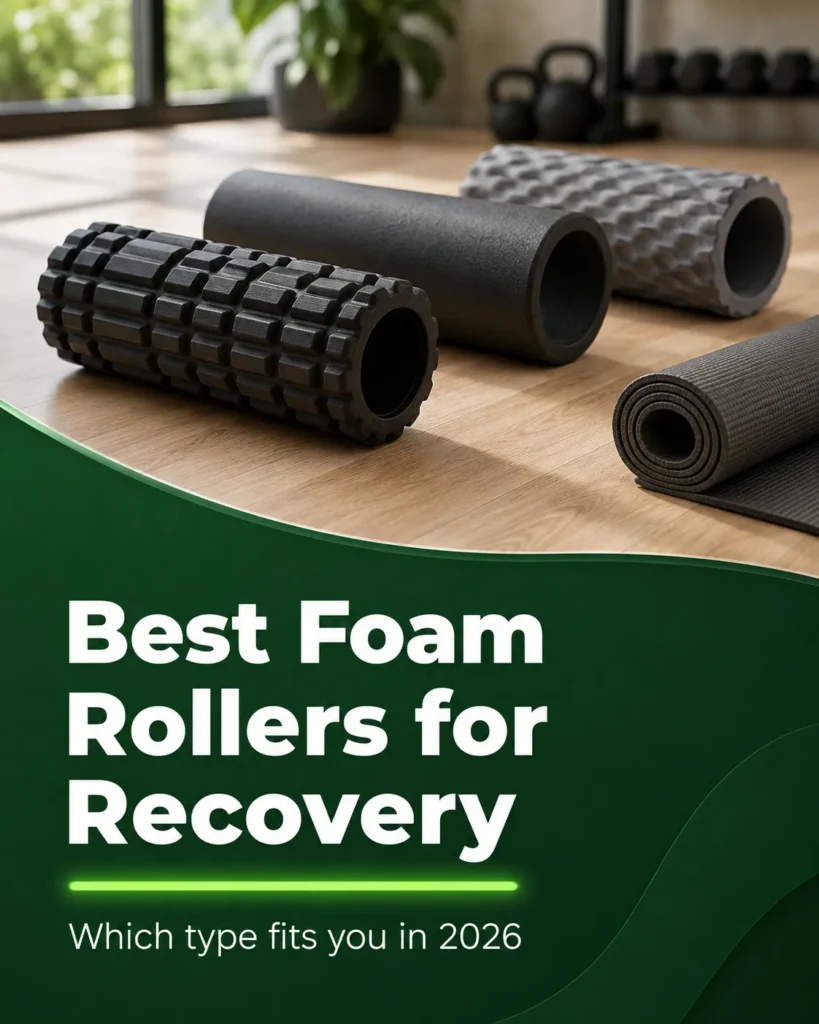
Among the best foam rollers 2026 has to offer, one is cheap and one of the most confusing to shop for, because they all look like the same tube of foam. They are not. Density, texture, length, and firmness change how one feels on tight muscles and who it fits. I compared the main types on what actually matters so you can pick the right one the first time. Let me break it down.
How These Picks Were Chosen
Honest note up front: these picks are based on product specifications, material and density comparisons, manufacturer information, and analysis of publicly available customer feedback. I have not hands-on tested every roller in this guide, and I will tell you plainly which is which.
My best overall pick among the best foam rollers 2026 offers for most people is a medium-density textured grid roller, because it hits the sweet spot: firm enough to do real work, forgiving enough for a beginner, and short enough to travel. If you are brand new and sensitive to pressure, a smooth roller is the gentler place to start.
Quick Recommendations
- Best overall: TriggerPoint GRID 1.0, a medium-density textured grid roller (firm but forgiving, works for most bodies)
- Best for beginners: Amazon Basics High-Density Foam Roller, a smooth, softer-feel roller (gentlest introduction)
- Best deep-tissue: RumbleRoller Textured Foam Roller, a firm, aggressively textured roller (for experienced, muscular users)
- Best for full back and legs: Gaiam Restore 36-Inch Foam Roller, a long roller (stable, covers more)
- Best for travel: TriggerPoint GRID Travel, a short, compact roller (fits a gym bag)
- Best splurge: Hyperice Vyper 3, a vibrating foam roller (adds vibration; nice-to-have, not a must)
Comparison at a Glance
| Type | Best For | Main Advantage | Main Drawback |
|---|---|---|---|
| Textured grid, medium (TriggerPoint GRID 1.0) | Most people | Balanced firmness, versatile | Too firm for the very sensitive |
| Smooth, soft (Amazon Basics) | Beginners | Gentlest, forgiving | Less targeted pressure |
| Firm deep-tissue (RumbleRoller) | Experienced users | Intense, targeted release | Too much for beginners |
| Long 36-inch (Gaiam Restore) | Back and full legs | Stable, covers more area | Bulky, not portable |
| Travel / compact (TriggerPoint GRID Travel) | On-the-go | Packs small | Short surface area |
| Vibrating (Hyperice Vyper 3) | Splurge seekers | Adds vibration, chargeable | Pricey, needs charging |
Which Type of Foam Roller Fits You?
1. Medium-Density Textured Grid, TriggerPoint GRID 1.0 — Best Overall
Why it earns the spot: the grid pattern mimics a hands-and-fingers feel, and medium density is firm enough to release tight muscles without being punishing. It is the one I would hand a friend who asked for a single do-it-all roller.
What to check: length (a mid or long grid covers more) and that the hollow core holds its shape.
Best for: most people, beginner to intermediate.
Skip it when: you are extremely pressure-sensitive, or you want maximum deep-tissue intensity.
Verdict: the versatile default. Check current price on Amazon
2. Smooth, Softer-Density, Amazon Basics High-Density Foam Roller — Best for Beginners
Why: a flat, smooth surface spreads pressure out evenly, which is the gentlest way to start if rolling feels intense. It has a predictable, consistent feel that will not overwhelm sensitive muscles.
Best for: true beginners, or rolling over sensitive areas.
Skip it when: you have rolled for a while and want more bite.
Verdict: the easiest on-ramp. Check current price on Amazon
3. Firm, Aggressively Textured, RumbleRoller — Best Deep-Tissue
Why: high density and pronounced ridges dig into stubborn knots for experienced users who find softer rollers do nothing.
Best for: muscular, experienced Active AJ types.
Skip it when: you are new to rolling; this will feel like too much.
Verdict: the intense option, for the seasoned. Check current price on Amazon
4. Long 36-Inch, Gaiam Restore — Best for Back and Full Legs
Why: the extra length gives a stable base for rolling the whole back and long leg muscles, and it doubles as a support for stretching and floor work.
Best for: home use, back and full-leg sessions.
Skip it when: you need something portable.
Verdict: the home-base roller. Check current price on Amazon
5. Compact / Travel, TriggerPoint GRID Travel — Best for Travel
Why: short enough to drop in a gym bag or suitcase so your routine survives a trip, without giving up the grid texture.
Best for: frequent travelers and small spaces.
Skip it when: you want to roll your whole back in one pass at home.
Verdict: the keep-the-habit-on-the-road pick. Check current price on Amazon
6. Vibrating, Hyperice Vyper 3 — Best Splurge
Why: adds a vibration motor on top of the texture, with multiple intensity levels. Some people love it; it is a nice-to-have, not a requirement, and it costs more and needs charging.
Best for: gadget lovers who will actually use the vibration.
Skip it when: you want simple and inexpensive.
Verdict: the treat-yourself option. Check current price on Amazon
What the Research Actually Says About Foam Rolling
The research behind the best foam rollers 2026 has to offer is not just my opinion. Foam rolling has been studied, and the findings are encouraging but modest. A large meta-analysis of foam rolling research found that rolling before a workout can produce small improvements in flexibility and sprint performance, and rolling after a workout may help reduce the feeling of muscle soreness and support perceived recovery. Read the study.
The honest read: the effects are real but generally small, and much of the benefit is short-term, especially the drop in soreness and the temporary bump in range of motion. Foam rolling is a useful, low-cost recovery habit, not a miracle. Use it to feel looser and recover a little more comfortably, and keep your expectations grounded.
What Actually Matters When Buying a Foam Roller?
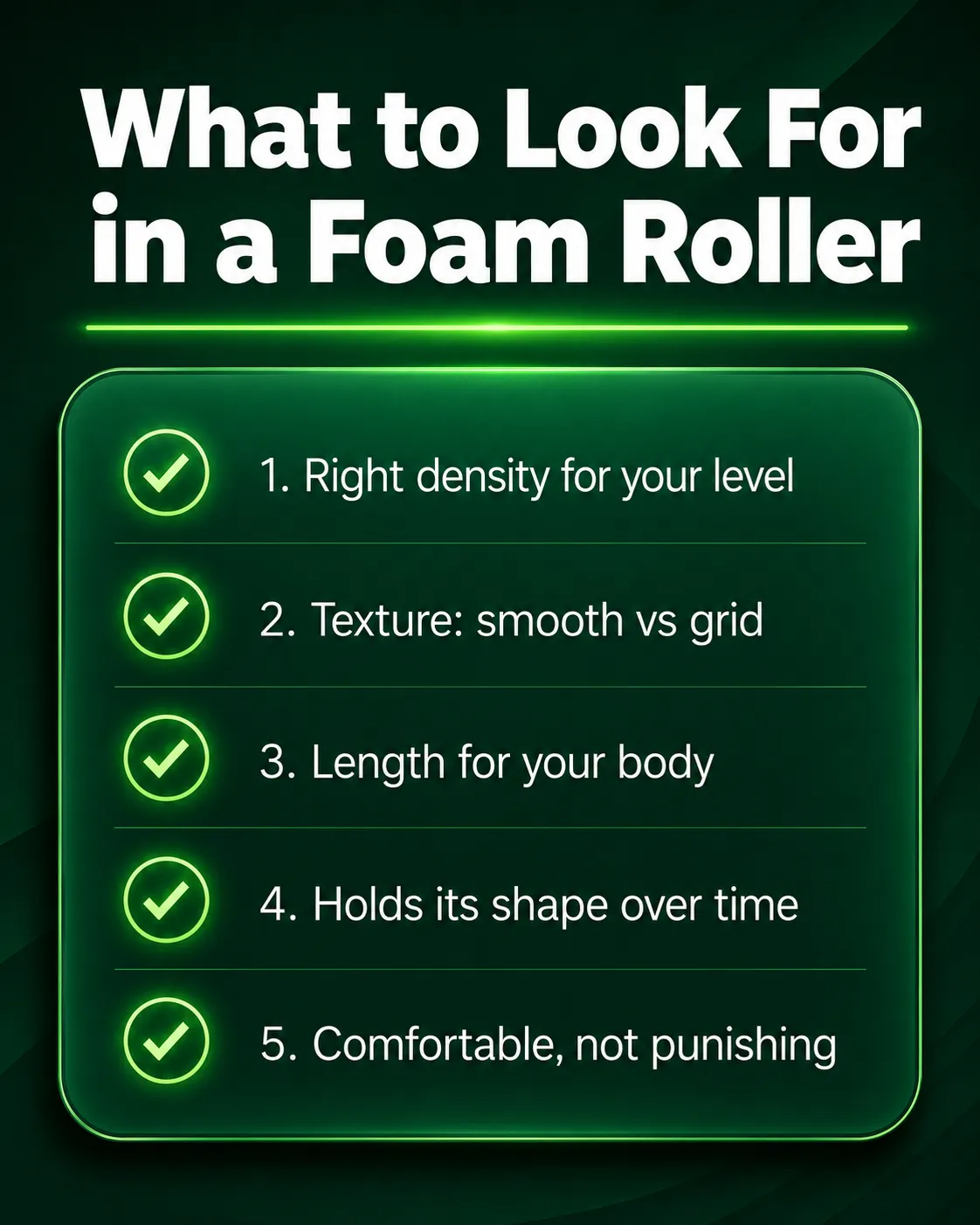
- Density and firmness. Softer for beginners and sensitive spots, firmer for experienced users. This is the single biggest decision.
- Texture. Smooth spreads pressure; grid and ridged textures target it. Start smoother, graduate firmer.
- Length. Long (about 36 inches) is stable and covers the back; short travels. Mid-length is a good compromise.
- Durability. Look for a roller that holds its shape and does not compress flat over time; a solid or sturdy hollow core matters.
Skip the marketing. A roller does not detox muscles or break up scar tissue. It helps you feel looser and may support recovery comfort. That is plenty.
How I Actually Use One
Rolling is the boring habit that pays off. After a hard session or a long day on my feet, five to ten minutes on the calves, quads, and upper back takes the edge off the next-day tightness. I go slow, pause on the tender spots, and breathe. It is not about gritting through pain; it is about steady, gentle pressure. Pair it with a short walk and real sleep and you feel the difference by morning.
The Supplement Half of Recovery
A roller works on the outside; recovery also happens on the inside. On the supplement side, the piece I lean on is turmeric with ginger. Turmeric’s active compound, curcumin, paired with black pepper (BioPerine) for absorption, may support a healthy inflammatory response and muscle comfort after activity, as part of a recovery routine. Our Turmeric with Ginger and BioPerine is part of our recovery lineup, and you can browse our better sleep support too.
Training hard and not sleeping? Read why your sleep changes in your 40s. And grab my free Evening Wind-Down Routine, the one-page recovery card I use, plus 30% off your first order.
FAQs: Foam Rollers
Are foam rollers actually worth it?
Yes, as a cheap recovery habit. Research shows small but real benefits: a bit more flexibility beforehand and less soreness afterward. Just keep expectations realistic.
What foam roller should a beginner buy?
A smooth, softer-density roller. It spreads pressure out and is the gentlest way to start. You can move to a firmer textured one later.
Is a textured foam roller better than a smooth one?
Neither is universally better. Textured targets pressure and suits experienced users; smooth is gentler and better for beginners and sensitive areas.
How long should I foam roll?
A few minutes per muscle group, five to ten minutes total, moving slowly and pausing on tender spots. More is not better.
Does foam rolling help muscle recovery?
It may help reduce the feeling of soreness and support perceived recovery, according to the research, though the effect is modest and mostly short-term.
Final Recommendation
Looking back at the best foam rollers 2026 has to offer, for most people a medium-density textured grid roller like the TriggerPoint GRID 1.0 is the best overall pick because it balances firmness and comfort and works for nearly every body. Start with a smooth, softer roller like the Amazon Basics High-Density Foam Roller if you are new or pressure-sensitive, and step up to a firm deep-tissue roller once you have some miles on you. Then use it consistently, and support recovery from the inside too.
Take a look at what else I recommend, and why I picked it.
These statements have not been evaluated by the Food and Drug Administration. This product is not intended to diagnose, treat, cure, or prevent any disease.
