
Published · Updated
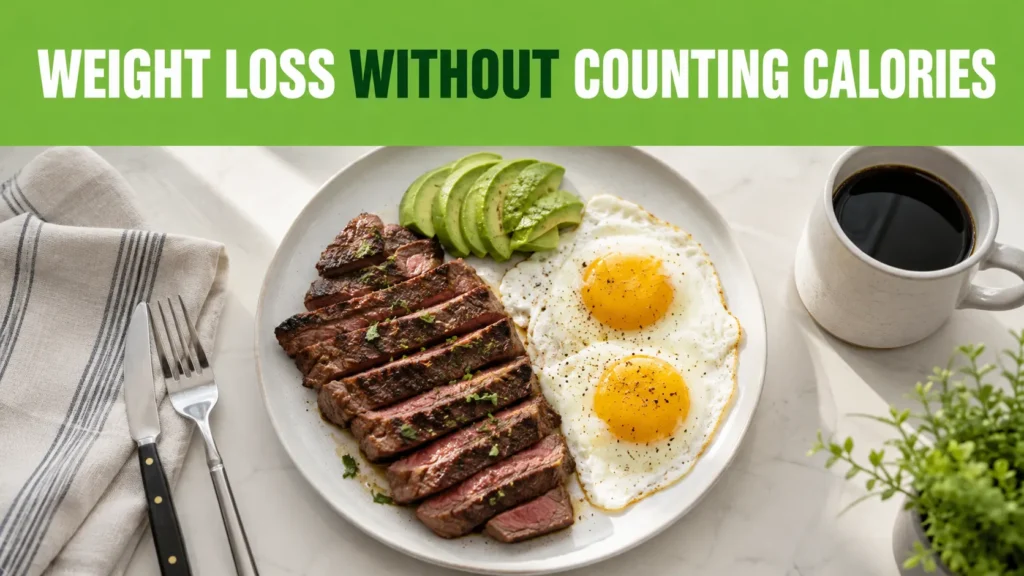
Weight loss without counting calories worked for me because I replaced the math with a handful of rules that did the math automatically: protein at every meal, real food over processed food, water and zero-calorie drinks only, and portions decided in the kitchen instead of at the table. I lost 77 pounds and never logged a single meal. Here is exactly how the no-counting version works.
Why Doesn’t Calorie Counting Work for Everyone?
Because it turns every meal into homework, and most of us already failed that class once. Counting works brilliantly for some people. It gives them clarity and control, and if that is you, count away and skip this post.
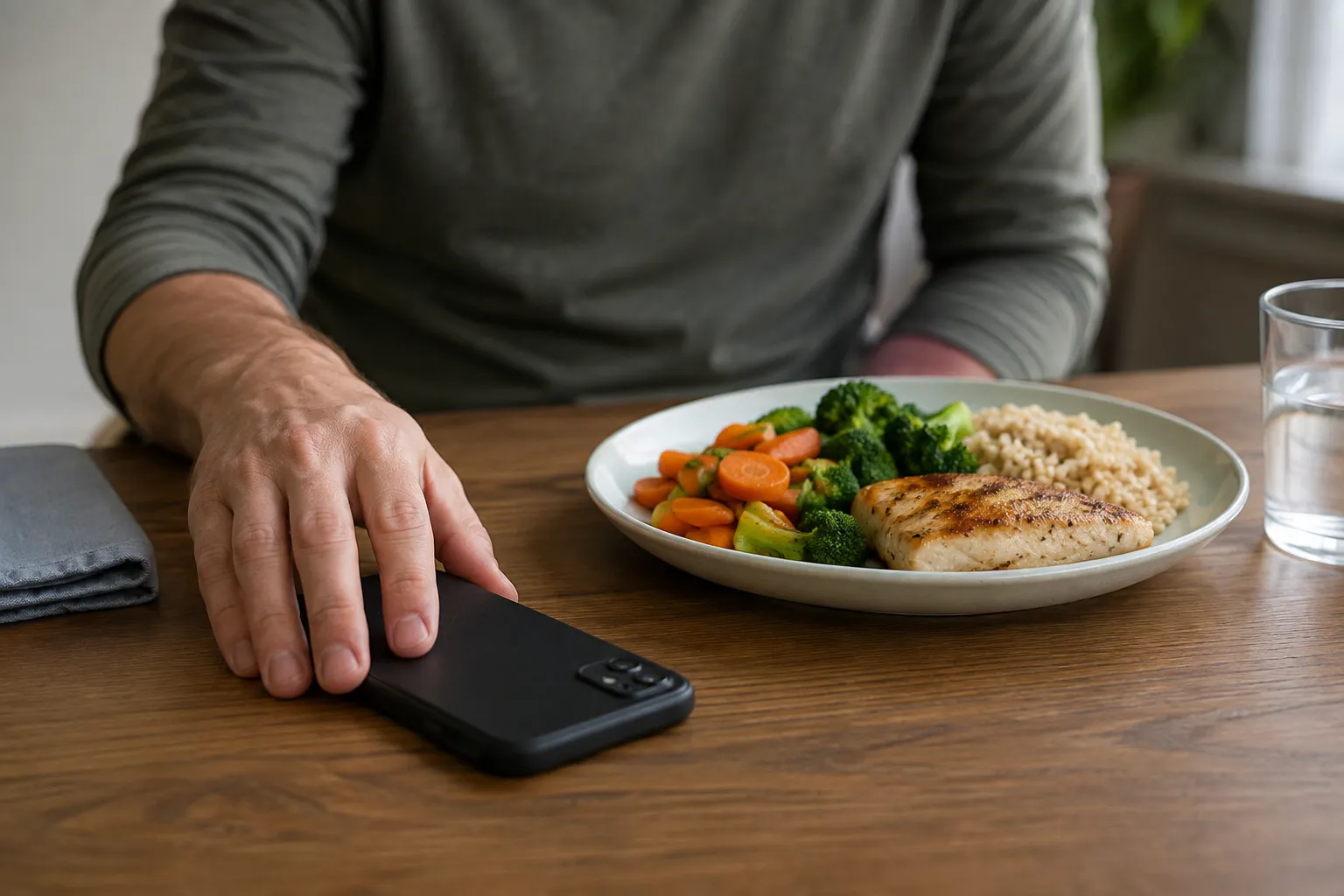
For me, tracking lasted about nine days every time I tried it. Then one busy day broke the streak, the broken streak felt like failure, and the failure ended the diet. Sound familiar? The problem was never the calories. It was building my entire system on a habit I could not sustain.
So I asked a different question: what would make the counting unnecessary?
What Rules Made Weight Loss Without Counting Calories Work?
Four rules, none of which require an app.
- Protein anchors every meal. Eggs, beef, chicken, tuna. Protein is the most filling thing on the plate, and a meal built around it self-limits in a way snack food never will.
- Real food only, most of the time. Whole food is hard to overeat in a way processed food is engineered to be easy to overeat. Nobody accidentally eats 1,200 calories of baked potatoes.
- Liquid calories got fired completely. Water, black coffee, unsweet tea, zero-calorie drinks. This one rule probably covered a third of my results by itself.
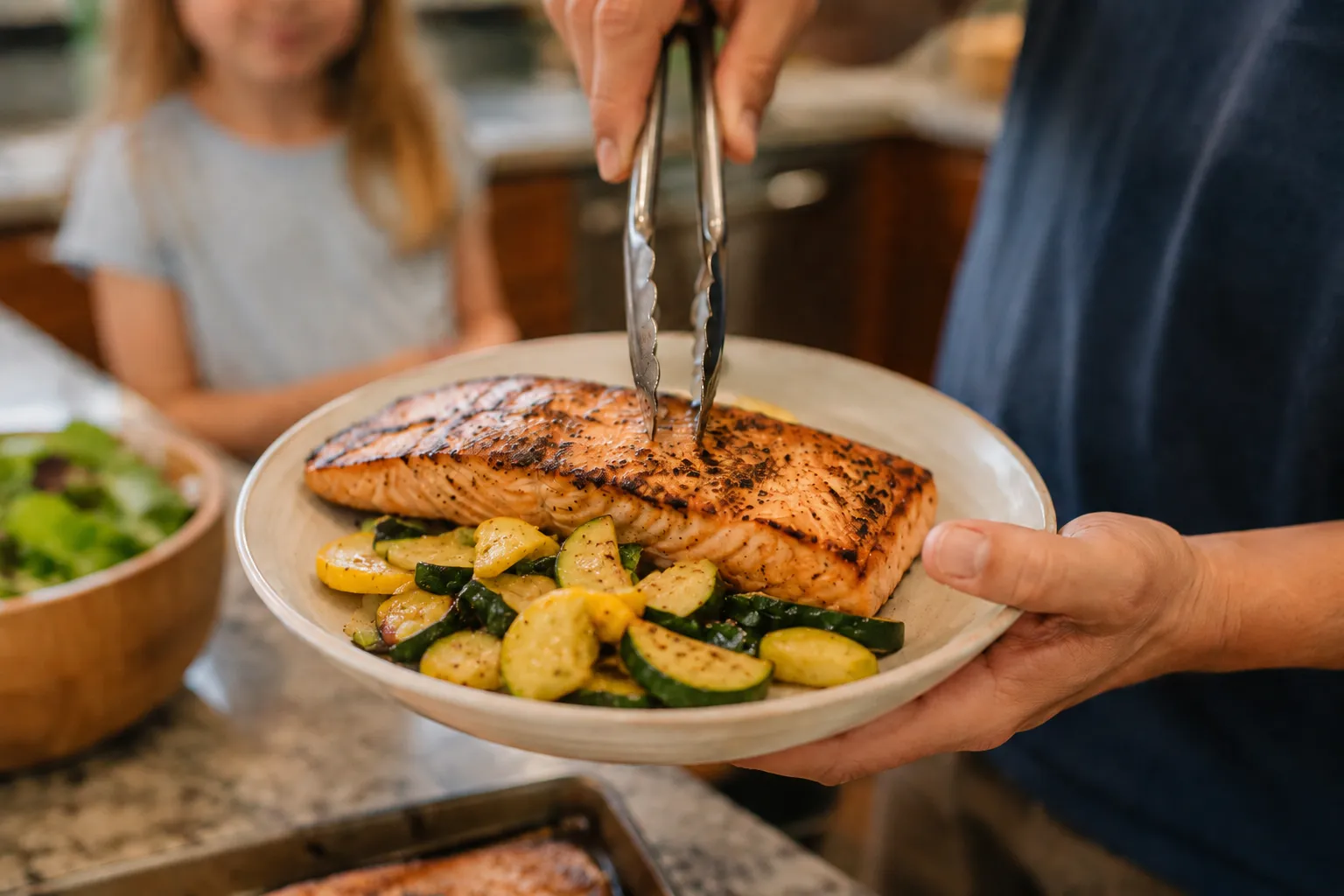
- Plates get made in the kitchen, once. Serve the plate, sit down, done. No pots on the table, no grazing refills. Seconds require standing up and walking, and it is amazing how often that tiny bit of friction was enough.
How Do You Control Portions Without Weighing Everything?
Hands and plates, mostly. A palm of protein, a fist or two of vegetables, a cupped hand of starch. It is not precise, and it does not need to be. Consistency beats precision when the direction is right.
I will say this honestly though: a food scale still earned a place in my kitchen, just not as a tracking device. I used it occasionally to calibrate, to learn what a real portion of rice or peanut butter actually looks like, because my eyes were lying to me by about double. Weigh a portion a few times, learn the visual, put the scale away.
The other portion trick that mattered: single-meal containers. When Saturday me packs the container, Tuesday me does not negotiate. Portion decisions made in advance are portion decisions made by the version of you with willpower to spare.
What About Hunger?
Real hunger got respected, boredom hunger got a glass of water and a ten minute wait. That pause sorted them out with embarrassing reliability.
And when I was genuinely hungry between meals, I ate: pickles, a handful of nuts, leftover protein, an apple. Notice those are all real foods. The rule was never “do not eat.” It was “eat food, not products.” Hunger on this system was rare precisely because protein and whole food do their job.

Research Box: What the Research Says
Studies comparing tracking-based and non-tracking approaches find both can produce meaningful weight loss when they create a consistent energy deficit, and that dietary adherence, not method, is the strongest predictor of success. The honest limitation: self-reported eating research is notoriously imprecise, and what works long term varies person to person more than headlines suggest.
Frequently Asked Questions
Can you really lose weight without tracking anything?
I tracked outcomes, not inputs: weekly weigh-ins, belt notches, energy levels. The eating side ran on rules instead of records, and 77 pounds came off over about ten months.
Isn’t this still calorie counting in disguise?
In a sense, yes. The rules exist because they reliably produce a calorie deficit. The difference is who does the math: the system does it once, instead of you doing it at every meal forever.
What if the scale stalls?
Tighten one rule for two weeks, usually portions or liquid calories, before touching anything else. Stalls broke for me with small adjustments, never with dramatic overhauls.
Is this approach right for everyone?
No approach is. People with specific medical or athletic targets often genuinely need the precision of tracking. Talk with your doctor about what fits your situation.
Final Thoughts
The best weight loss system is the one that still runs on your worst week. Counting collapsed for me on busy days. Rules did not, because rules do not care how busy you are. Build the system once, let it make the decisions, and save your willpower for the days that really test it.
Got something like this going on too? Shoot me a message, I’d love to hear it.
These statements have not been evaluated by the FDA. This product is not intended to diagnose, treat, cure, or prevent any disease.
