
Published
Healthy fall meals can fit a weight-management plan when you choose foods you enjoy, consider portions, and prepare for busy days. Start with a protein food, vegetables, and other foods that fit your needs. A manageable plan gives you something useful to repeat rather than another set of rules to abandon.
When I changed how I ate, finding food I liked mattered. Steak, eggs, vegetables, cottage cheese, and pickles were foods I wanted to eat. That made ordinary meals easier to choose. Your list may look different from mine, and that’s fine.
What makes healthy fall meals practical?
Think about your actual week. A meal that needs a long shopping trip and an hour you don’t have may be a poor fit, even if it looks great in a photo.
Choose meals you can assemble from overlapping ingredients. Roasted vegetables can go alongside chicken, into a soup, or into a lunch bowl. Beans can become part of chili or a quick bowl with rice and vegetables.
These are meal ideas, not a prescribed eating plan. The amounts that fit your goals will depend on your needs and the rest of your day.

How can you build a meal without starting from scratch?
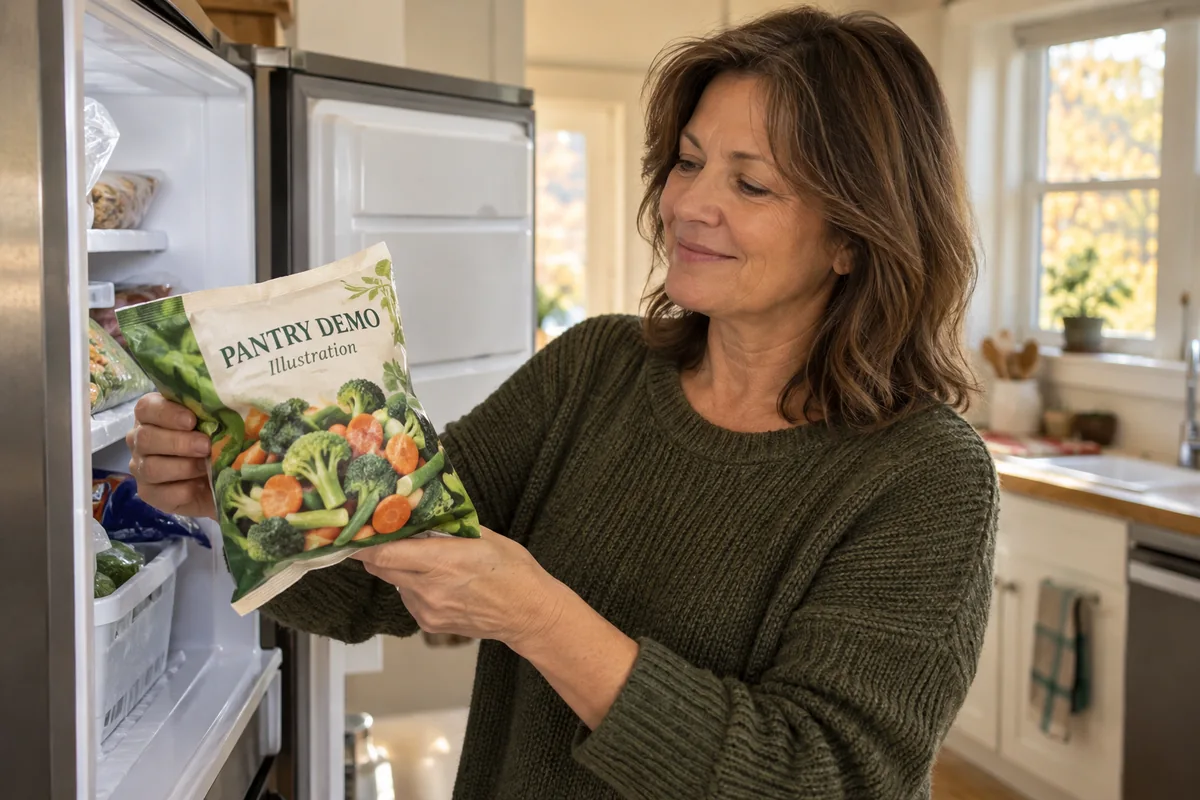
Pick a protein food you enjoy. Options include chicken, fish, eggs, beans, or lentils. Add vegetables in a form you will use, including frozen vegetables when they make preparation easier.
Then decide what else belongs on the plate. Potatoes, rice, or another grain can be part of the meal. Portions still matter, including oil, dressings, cheese, and other additions.
You don’t need to remove an entire food group to make a meal more deliberate. The goal is a pattern that works across the week, not a perfect dinner followed by several days of frustration.
What are some starting combinations?
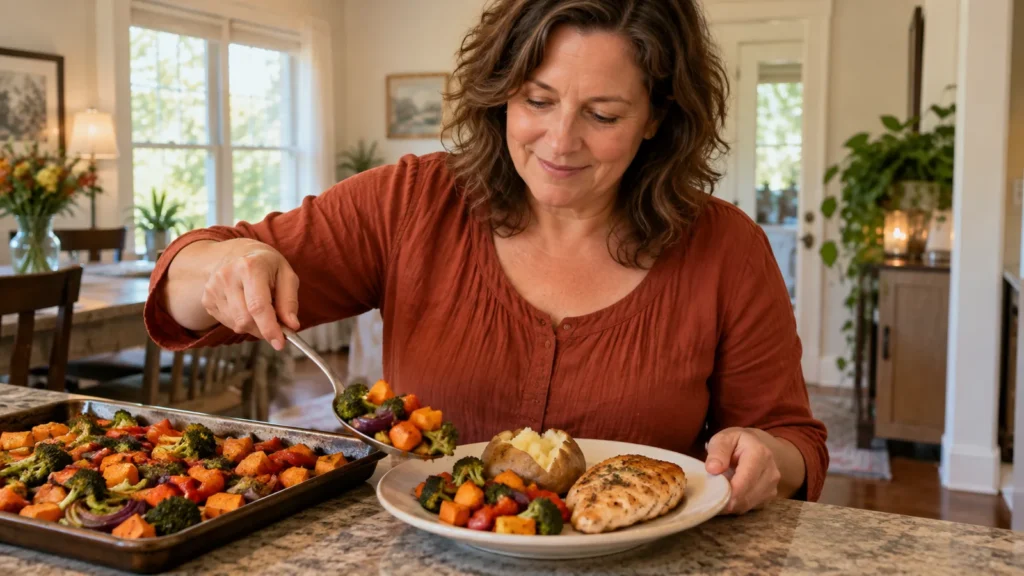
Try a chicken and vegetable tray meal with a baked potato. Plan enough vegetables for another lunch, and portion the leftovers before putting them away.
A bean and vegetable chili is another option. Choose toppings intentionally rather than letting them become an unplanned second meal. A side or extra protein food can change how the meal fits your needs.
A fish, rice, and vegetable bowl lets you prepare components separately. That can help when people in the household prefer different combinations. If fish doesn’t suit you, choose another protein you enjoy.
Use these combinations as starting points. They are not tested recipes, calorie targets, or promises of weight loss.
Why should portions get a place in the plan?
NIDDK explains that a portion is the amount you choose to eat, while a serving on a food label is a reference amount. They are not always the same.
If a package has several servings and you eat the entire package, the label numbers need to reflect that amount. The same principle applies when you divide a pot or tray into lunches.
Choose a portion, eat it, and pay attention to how it fits the meal and your day. A food scale can be a learning tool if you find it useful. It does not have to turn every meal into a project.
How can groceries make the week easier?
Write down a few meals before shopping. Check what is already in your kitchen, then buy the ingredients that complete those meals. Give fresh ingredients a plan so they don’t sit unused.
My grocery-list guide can help you organize the choices. The meal-prep basics article covers ways to make preparation more manageable.
What if a busy day changes the plan?
Keep one easy backup meal available. Eggs with vegetables, a prepared portion of soup, or beans with a simple side can be more useful than a plan that depends on everything going right.
You can return to the next planned meal without making a busy day into a verdict about yourself. Adjust the plan if it keeps failing at the same point.

Frequently asked questions
Can fall comfort foods fit a weight-management plan?
They can fit when the overall eating pattern and portions suit your needs. A meal’s seasonal name does not determine its value.
Do I need a supplement to make this work?
These meal ideas do not depend on a supplement. Food and supplement decisions answer different questions.
Will these meals produce the same result I had?
My experience is personal. It is not a forecast of someone else’s weight change.
For more practical food and routine guidance, join the AltHealth365 newsletter.
Sources
NIDDK: Portions and label serving sizes and practical meal planning.
This article provides general nutrition information. For an individualized eating plan, discuss your needs with a qualified healthcare professional or registered dietitian.
