
Published · Updated
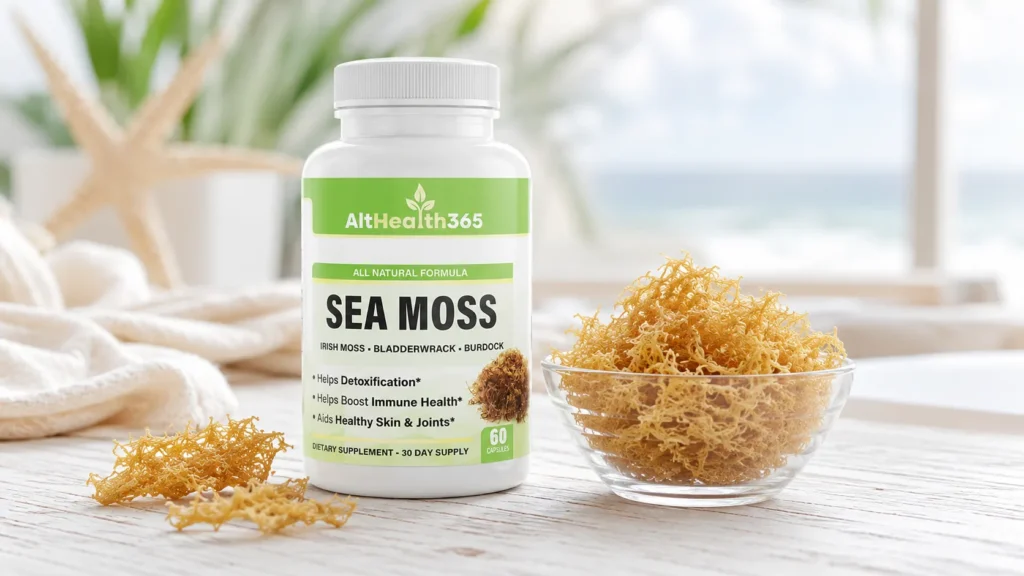
Sea moss for gut health is a red algae, also called Irish moss, rich in a fiber your body does not fully digest. That fiber may act as a prebiotic, feeding the friendly bacteria in your gut and supporting its natural balance. Most research so far is early and animal-based, so it works best as part of a whole-food routine.
Let’s break it down. Sea moss has been all over the internet lately, and most of what I see is either wild hype or people rolling their eyes at it. I like to sit right in the middle. So today I want to talk honestly about sea moss for gut health, what it may support, and what we actually know.
No miracle talk here. Just me sharing what I have learned and how I fit it into my day.
What Is Sea Moss, Anyway?
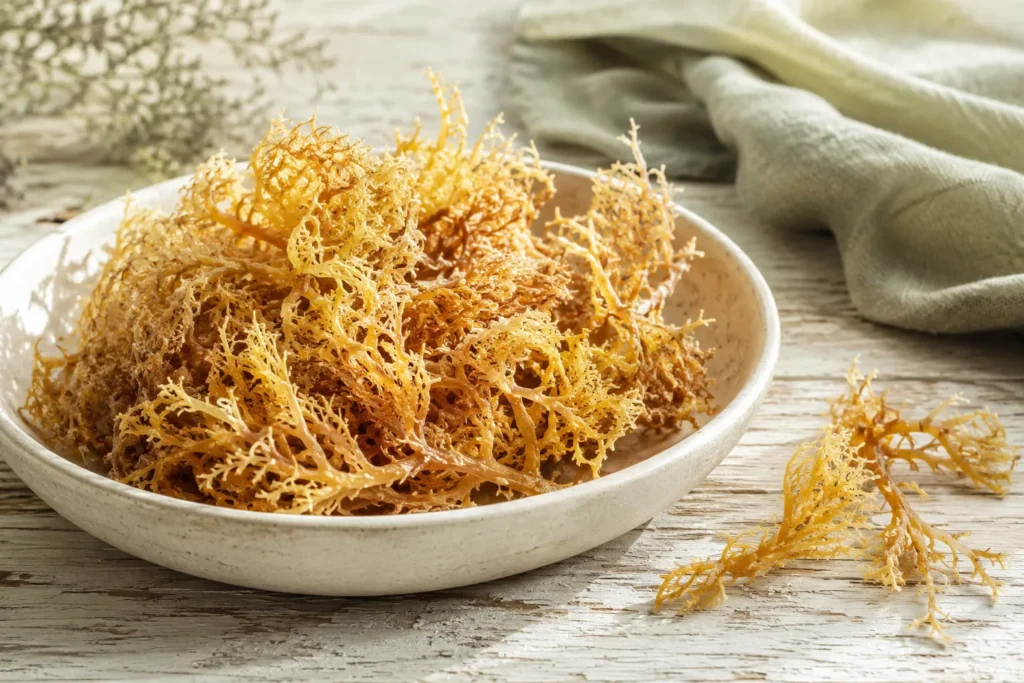
Sea moss is a type of red algae. You may hear it called Irish moss too. It grows along rocky coastlines, and people have been eating it for a very long time.
The version I use pairs it with two other plants, bladderwrack and burdock. Together they give you a good hit of minerals in a simple form.
In plain English, it is sea vegetable. Same family idea as the greens I grow in my garden, just from the ocean instead of the soil.
Why Do People Connect Sea Moss and the Gut?
Here is the part that gets folks curious. Sea moss is rich in a kind of fiber that your body does not fully digest.
That matters because the friendly bacteria living in your gut love to feed on certain fibers. When a fiber feeds those good bacteria, scientists call it a prebiotic. Think of it like fertilizer for the little garden inside you.
So the idea is simple. Sea moss may act as a food source that supports your gut’s natural balance. That is why you keep seeing sea moss for gut health pop up everywhere.
I want to be straight with you though. The research is still early, and most of it is not done in people yet. Keep reading and I will show you exactly what I mean.
A Little Story From My Side
Years back, I went deep into reading about processed food. What I found honestly changed everything for me. The more I understood what was in the boxed and bagged stuff, the more eating clean started to feel like self-respect instead of a chore.
That research phase is the same reason I dug into sea moss instead of just trusting a flashy label. I wanted to know what was real.
These days I have finally found food I actually enjoy. Steak, eggs, fresh veggies, cottage cheese, and yes, a few pickles. Sea moss just slides into that same simple, whole-food lane for me.
What the Research Actually Says
I promised honesty, so here is a straight look at the science. I read these so you do not have to.
- Red algae may act as a prebiotic. A study on the cultivated red seaweed Chondrus crispus (a close cousin to Irish sea moss) found it helped shape colonic microbiota and gut metabolites in animals, in a way similar to a known prebiotic fiber. This was an animal study, not a human one, so we cannot promise the same in people yet. (Source: PubMed, National Library of Medicine)
- Seaweed fibers are being studied as gut microbiota modulators. A 2021 scientific review looked at how seaweed components may feed beneficial bacteria and support the gut environment. The authors were clear that more human research is still needed. (Source: PMC, National Institutes of Health)
- Sea moss is naturally high in iodine. Iodine supports normal thyroid function, but seaweed can carry a lot of it, and more is not always better. An NIH-hosted paper on iodine, seaweed, and the thyroid explains why balance matters and why you should talk to your doctor if you have a thyroid condition. (Source: PMC, National Institutes of Health)
Bottom line. The early signals are interesting, especially around fiber and gut bacteria. But most of the strong data is from animal and lab studies, not large human trials. So I treat sea moss as a helpful part of a whole routine, not a magic fix.
How I Actually Use It
I keep things simple. I take a Sea Moss Complex with my morning routine, alongside real food and plenty of water.
I do not lean on it to do everything. It sits next to the basics that matter most, like whole foods, movement, and sleep.
A lot of my movement comes from the land itself. Out on my land, between gardening, yard work, and woodworking, staying active is just part of the day. Hard to eat junk when you grew half your plate yourself.
Sea moss is one small brick in that bigger wall. That is the honest way to think about it.
Who Might Want to Give It a Look?
If you are already health-conscious and you care about your gut, sea moss may be worth exploring. It is a whole-food source of minerals and prebiotic fiber, and it is easy to add to a morning habit.
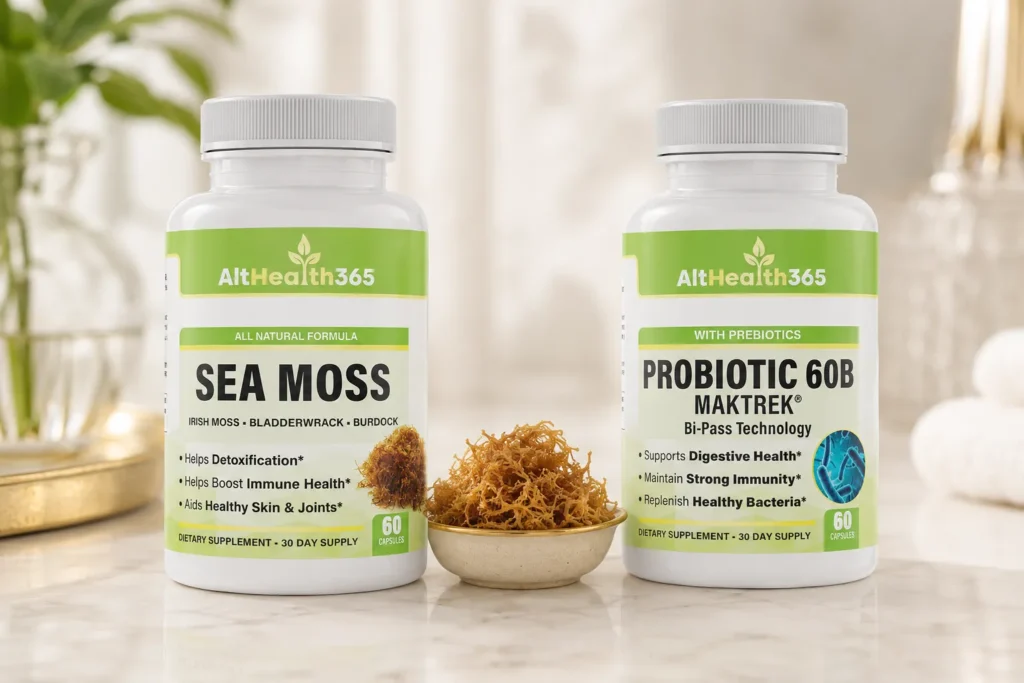
If you want to go a step further, pairing sea moss with a quality probiotic is a natural combo. The sea moss brings the prebiotic fiber, and the probiotic brings the friendly bacteria. Food and the folks who eat it, working together.
That is exactly why I put together a bundle this week. More on that below.
A Few Honest Reminders
Sea moss is high in iodine, so if you have a thyroid condition, please talk to your doctor first. This is not the place to guess.
Start slow, drink your water, and pay attention to how you feel. Your body will tell you plenty if you listen.
And remember, no single supplement replaces real food and real habits. Sea moss may support your gut, but you are still the one doing the daily work. I respect that, because I do it too.
Where to Start
If you want to try it, here is what I offer:
- Sea Moss Complex with Burdock and Bladderwrack, $24.99
- Gut Reset Duo, $46.99, our Sea Moss plus Probiotic bundle that is live this week
- Browse all gut health support
Whatever you choose, go in with clear eyes. Support your body’s natural rhythm, keep your food real, and give it time.
These statements have not been evaluated by the FDA. This product is not intended to diagnose, treat, cure, or prevent any disease.
Frequently Asked Questions
Is sea moss good for gut health?
Sea moss is a whole-food source of fiber and minerals, and that fiber may act as a prebiotic that feeds friendly gut bacteria. The early research is promising but mostly animal-based, so think of it as one supportive part of a whole routine, not a fix.
How much sea moss should I take?
Follow the serving directions on your product label and start slow. Because sea moss is high in iodine, more is not always better. If you have a thyroid condition or take medication, talk to your doctor before adding it.
Can I take sea moss with a probiotic?
Yes, they pair naturally. Sea moss brings prebiotic fiber and a probiotic brings friendly bacteria, so they may support your gut from two angles. Many people take them together as part of a daily routine.
Is sea moss safe to take every day?
For most healthy people, a sensible daily serving is fine, but the iodine content means balance matters. Drink your water, start slow, and pay attention to how you feel. Anyone with a thyroid condition should check with a doctor first.
Who should be cautious with sea moss?
Anyone with a thyroid condition, anyone who is pregnant or nursing, and anyone on medication should talk to a doctor before starting. Sea moss can carry a lot of iodine, so this is not the place to guess.
If this helped you, share it with someone who needs it, or shoot me a message and let’s talk!
