

Published · Updated
Magnesium glycinate vs melatonin, they get lumped together as “the sleep supplements,” but they are not doing the same job at all. Picking the right one comes down to what is actually getting between you and a good night. Let me break it down.
My Own Melatonin Story
When my sleep first fell apart, melatonin was the first thing I tried. It knocked me out, no question. But I would wake up foggy, like I was walking through the morning in slow motion. It solved one problem and handed me another. That was not the solution I was looking for, so I kept digging, and that is where magnesium came in.
That is not a knock on melatonin. It is a reminder that magnesium glycinate vs melatonin is really a question of two different tools fitting different situations.
What Melatonin Actually Does
Melatonin is a hormone your body already makes to signal that it is time to sleep. As a supplement, it is basically a timing cue. It is not a sedative in the knock-you-out sense, it is more like nudging your internal clock and saying “it is night now.”
Best for: timing problems. Jet lag, shift work, a schedule that got knocked off track, or nights when your body clock and the actual clock disagree.
Watch-outs: many people take far more than they need, and higher amounts are more likely to leave you groggy the next morning, which was exactly my experience. It is a short-term, situational tool for most people, not a nightly forever habit.
What Magnesium Glycinate Actually Does
Magnesium glycinate is not a timing cue and it is not a hormone. It is a mineral your nervous system uses to relax, bound to a calming amino acid so it absorbs well and stays gentle on the stomach.
Instead of forcing sleep, it supports the wind-down, helping your body downshift so sleep comes more naturally. That is a very different feeling than being switched off.
Best for: the “my body will not relax” problem. Racing thoughts, tense muscles, general everyday stress that keeps you wired at night. It fits a nightly routine because it is gentle and you are supporting a system rather than overriding it.
For me, once magnesium glycinate was consistent, the 2am wake-ups eased and the racing thoughts quieted, and I woke up rested instead of foggy. It became a quiet MVP in my lineup.
The Honest Side-by-Side: Magnesium Glycinate vs Melatonin
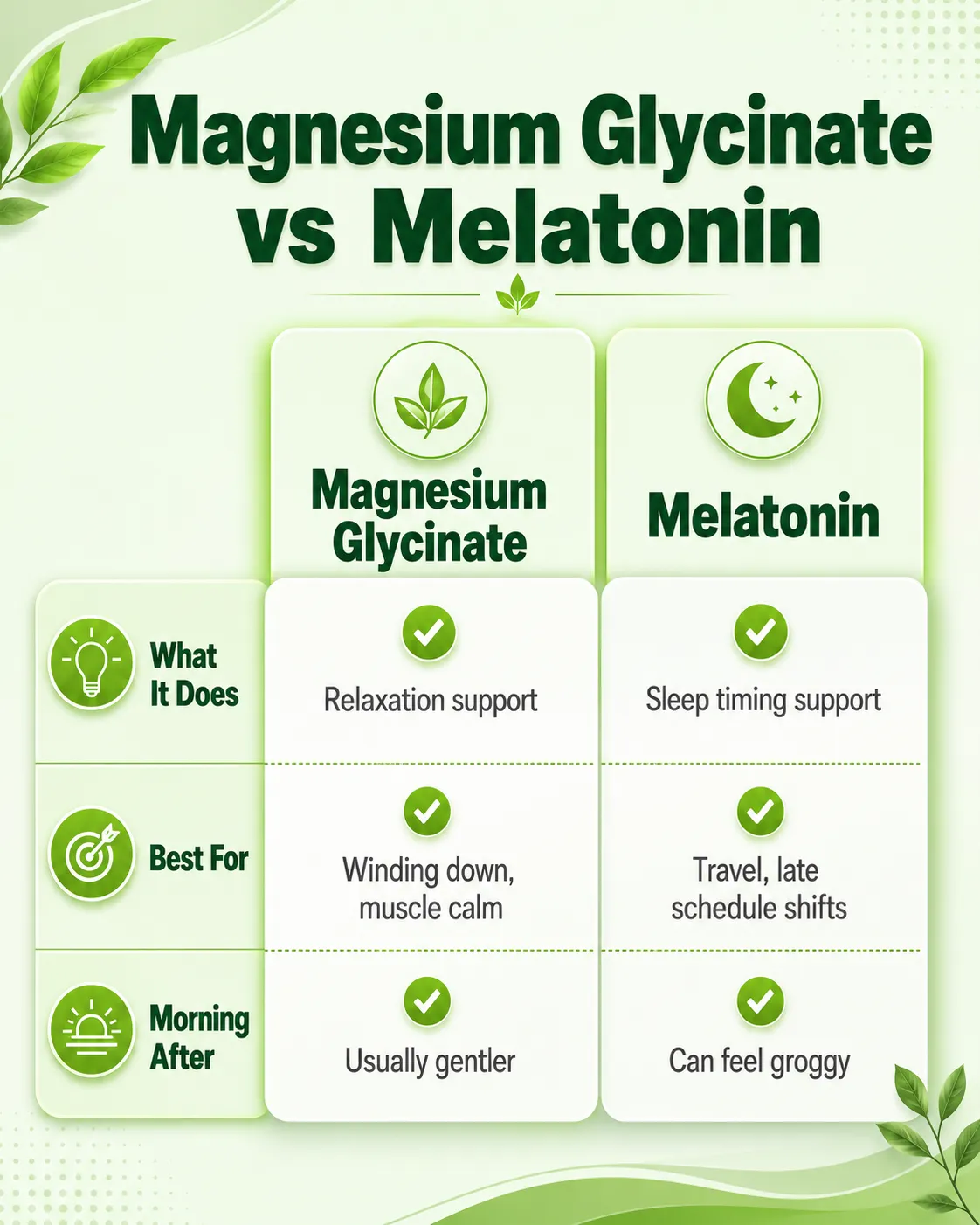
| Magnesium Glycinate | Melatonin | |
|---|---|---|
| What It Does | Relaxation support | Sleep timing support |
| Best For | Winding down, muscle calm | Travel, late schedule shifts |
| Morning After | Usually gentler | Can feel groggy |
- What it is: Melatonin is a hormone and timing cue. Magnesium glycinate is a mineral for relaxation.
- Best for: Melatonin for clock and timing issues. Magnesium for a wound-up, will-not-relax body.
- Morning after: Melatonin can leave some people groggy. Magnesium glycinate is not known for morning fog.
- Nightly use: Melatonin is usually better short-term and situational. Magnesium glycinate fits a consistent nightly routine.
- The feel: Melatonin nudges the clock. Magnesium supports the wind-down.
Can You Use Both?
Sometimes people do, for example a short run of melatonin to reset after travel while keeping magnesium as the steady nightly base. If you are going to combine anything, that is a good moment to check with your doctor, especially if you take medication or manage a health condition.
Which Should You Reach For?
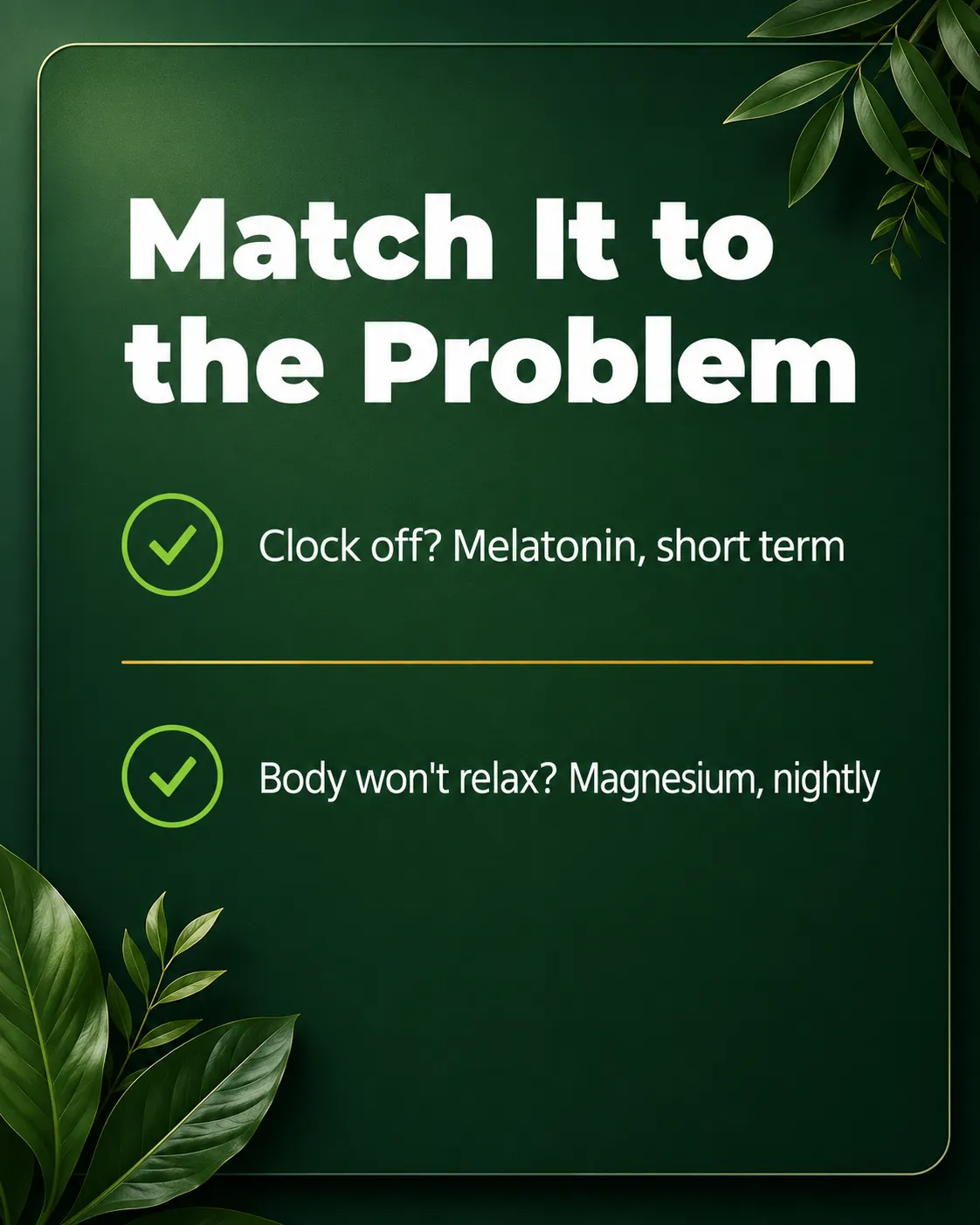
When it comes down to magnesium glycinate vs melatonin, the right pick depends on your actual problem. If your problem is timing, your clock is off from travel or a schedule change, melatonin is the more logical short-term tool.
If your problem is that your body just will not settle, tense, wired, mind running, magnesium glycinate is the one I would start with, and it is the one I reach for almost every night.
What the Research Actually Says About Magnesium and Sleep
Since I am steering you toward magnesium for nightly use, here is the research behind that, not just my opinion.
A randomized, placebo-controlled trial published in Nature and Science of Sleep tested magnesium bisglycinate, the glycinate form, in healthy adults reporting poor sleep, and found improvements in sleep measures compared to a placebo. Read the study.
An earlier systematic review and meta-analysis found older adults fell asleep roughly 17 minutes faster on average with magnesium versus a placebo, though the authors were honest the studies were small and lower quality, so they called it supportive rather than settled. Read the review.
A few honest takeaways:
- The benefit looks most consistent in people already low in magnesium, which is common with age.
- Glycinate keeps appearing in this research because it is well absorbed and gentle, which is why it suits nightly use.
- This is still a developing area. Magnesium may support relaxation and sleep, but it is not a cure or a guarantee, and the researchers say so too.
That is the honest picture, and it is why magnesium is my steady nightly base rather than a hope.
Product Spotlight: Magnesium Glycinate 275mg
Our Magnesium Glycinate 275mg delivers 275mg of elemental magnesium per 3-capsule serving, in a highly absorbable, stomach-gentle form. Non-GMO, third-party lab tested, GMP certified, made in the USA, vegetarian capsules.
- May support relaxation and a healthy response to everyday stress
- May support restful sleep as part of an evening routine
- May support muscle comfort and recovery
90 capsules, a 30-day supply. $22.99.
Shop Magnesium Glycinate 275mg
Want the routine that goes with it? Grab my free Evening Wind-Down Routine card, the exact timing and steps I use, plus 30% off your first order.
FAQs: Magnesium Glycinate vs Melatonin
Is magnesium or melatonin better for sleep?
It depends on the problem. Melatonin suits timing issues like jet lag or shift work. Magnesium glycinate suits a body that will not relax, and it fits a nightly routine better.
Why does melatonin make me groggy?
Often it is a dose issue. Many people take more than they need, and higher amounts are more likely to leave morning fog.
Can I take magnesium and melatonin together?
Some people do, such as short-term melatonin for travel with magnesium as the steady base. Check with your doctor before combining, especially on medication.
Does magnesium glycinate make you sleepy?
It is not a sedative. It may support relaxation so sleep comes more naturally, rather than forcing you under.
Which one can I take every night?
Magnesium glycinate is the one better suited to consistent nightly use. Melatonin is usually a short-term, situational tool.
Final Thoughts
Different tools, different jobs. That is the whole magnesium glycinate vs melatonin decision in one line: match the supplement to the actual problem, timing versus tension, and you will pick right. For a wound-up body that just will not settle, magnesium glycinate is where I would start.
If you want to see what else I keep in my own cabinet, take a look around the site.
These statements have not been evaluated by the Food and Drug Administration. This product is not intended to diagnose, treat, cure, or prevent any disease.
