
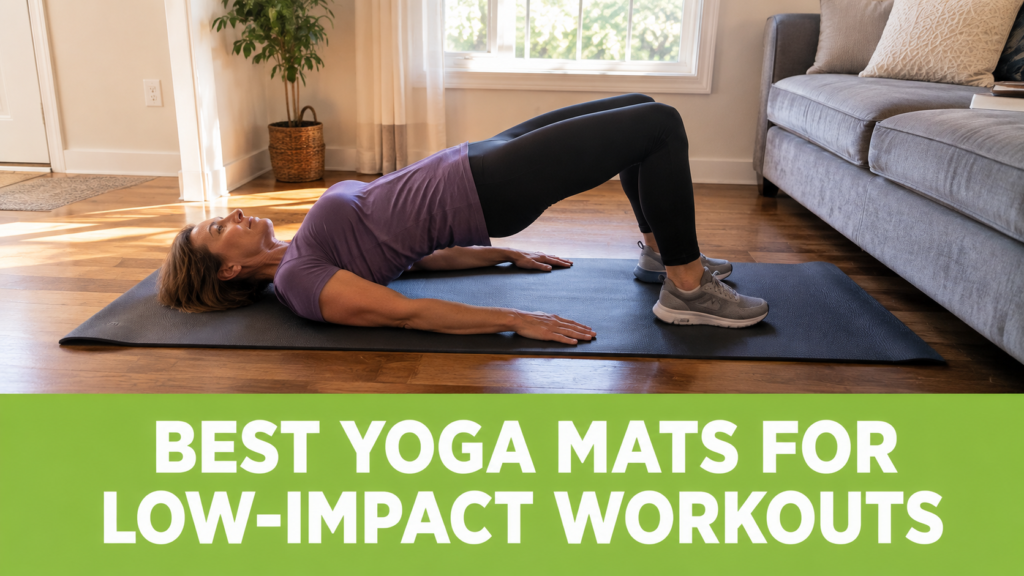
Published
This post contains affiliate links. If you buy through them, I may earn a small commission at no extra cost to you, and it never changes what I recommend.
The best yoga mats for low-impact home workouts are the thicker ones, 6mm and up, with a surface that actually grips. Comfort on your joints matters more than the featherweight travel features serious yogis chase. And here’s the kicker: a decent mat is the cheapest piece of home fitness equipment you can buy.
Wait, Am I a Yoga Guy Now?
Let me be honest right out of the gate. I am not a yoga guy. I’m a gym guy, a gardening guy, a yard work guy. The longest I’ve ever held a pose is however long it takes to find a dropped screw under the workbench.
But here’s the thing nobody tells you. A yoga mat is not really for yoga. Not just for yoga, anyway. It’s for stretching. Floor exercises. Core work. All the stuff every trainer on earth says to do and almost everyone (me included, for years) skips because the floor is hard and the couch is soft.
September is Healthy Aging Month, and the whole theme this month is low-impact movement. So I went down the research rabbit hole on mats the same way I did when I looked into walking pads. This is what my research says, laid out plain.
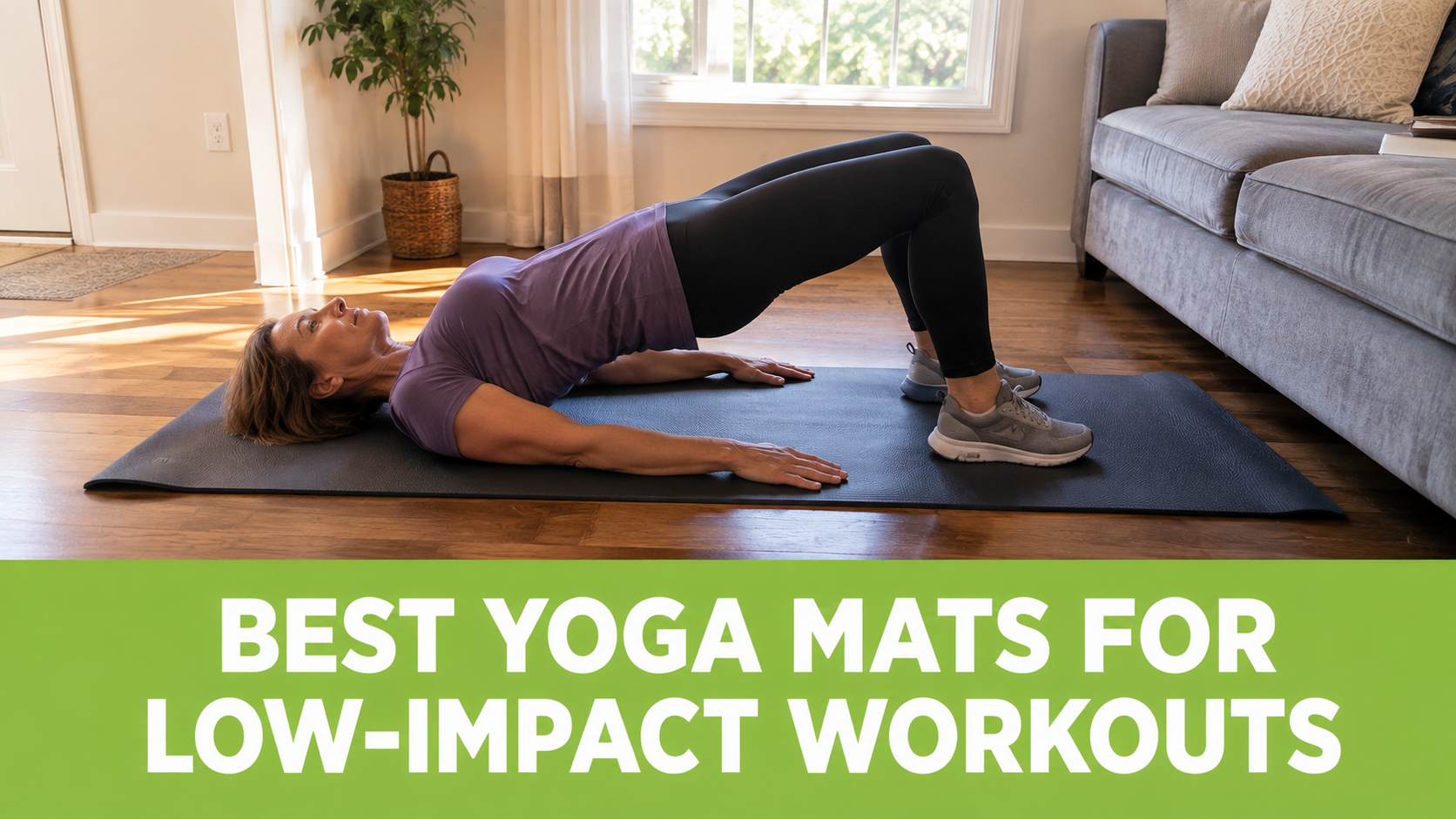
Why Does a Mat Matter for a Low-Impact Workout?
Because the floor doesn’t care about your knees, and after 40 your knees start keeping score.
Hardwood, tile, and even carpet over concrete are unforgiving surfaces. When you’re doing low-impact work like stretching, bird dogs, glute bridges, or a few minutes of core work, your knees, hips, tailbone, and wrists are pressing right into that surface. A good mat puts a layer of firm cushion between you and the floor, which means you last longer and hurt less.
There’s a sneakier benefit too. A mat rolled out on the floor is a commitment device. It marks a spot in your house that says “this is where movement happens.” I lost 77 lbs after my 2024 health scare, and one of the biggest lessons from that whole stretch of my life was this: the easier you make the habit, the more it happens. A mat you can see is a workout you might actually do.
What Should You Look For in a Yoga Mat?
Four things, in this order.
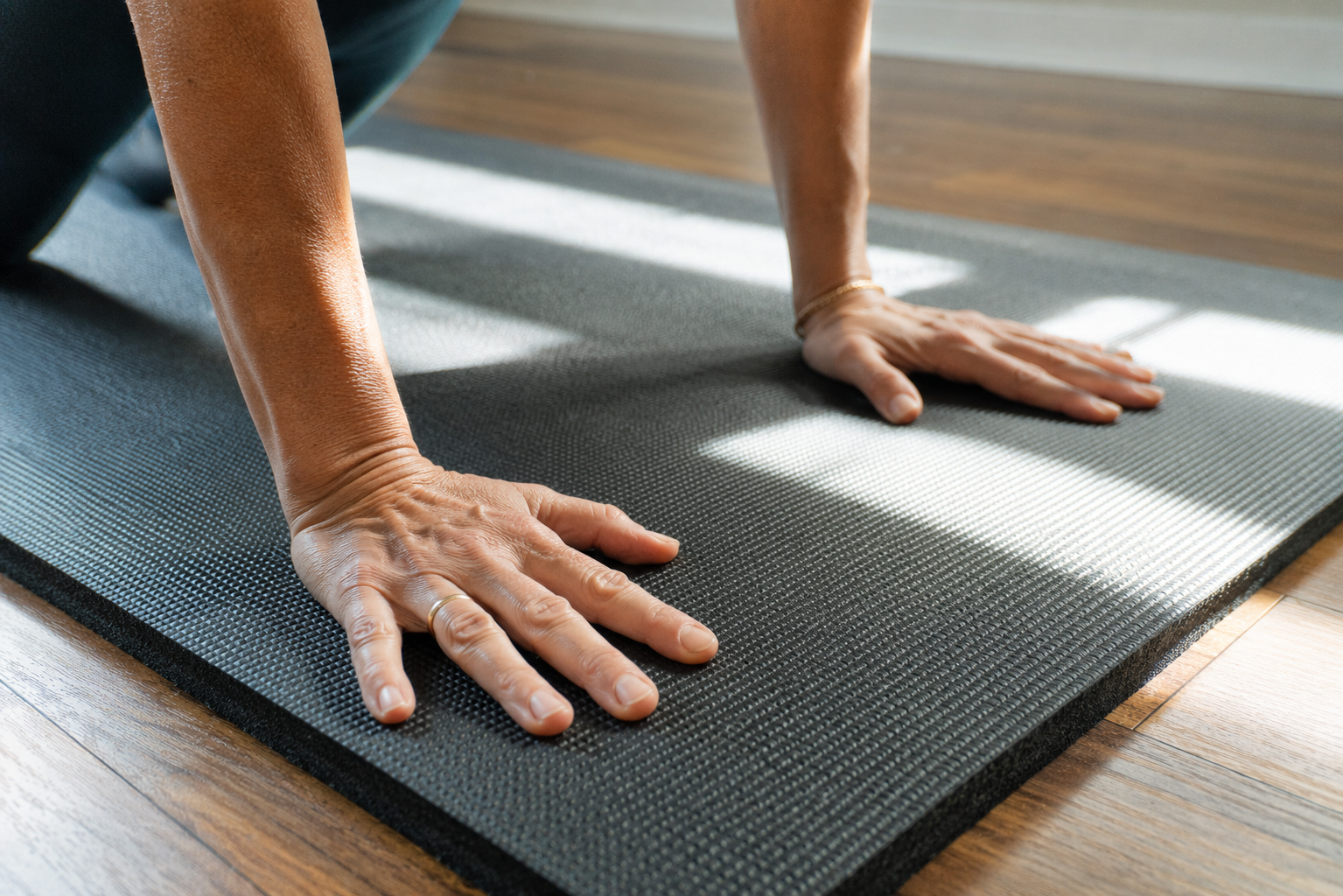
Thickness. For low-impact home workouts, 6mm is the sweet spot and the floor of what I’d consider. The thin 3mm travel mats are built for people carrying them to a studio, not for comfort. If your knees are sensitive, go 8 to 10mm.
Grip. A mat that slides on the floor, or that your hands slide on, is worse than no mat at all. Look for a textured, non-slip surface on top and a grippy bottom that stays put on hard floors.
Size. Standard mats run about 68 inches long and 24 inches wide. If you’re taller than about 5’10”, look for a 72-inch or longer mat so your head and heels both stay on the cushion.
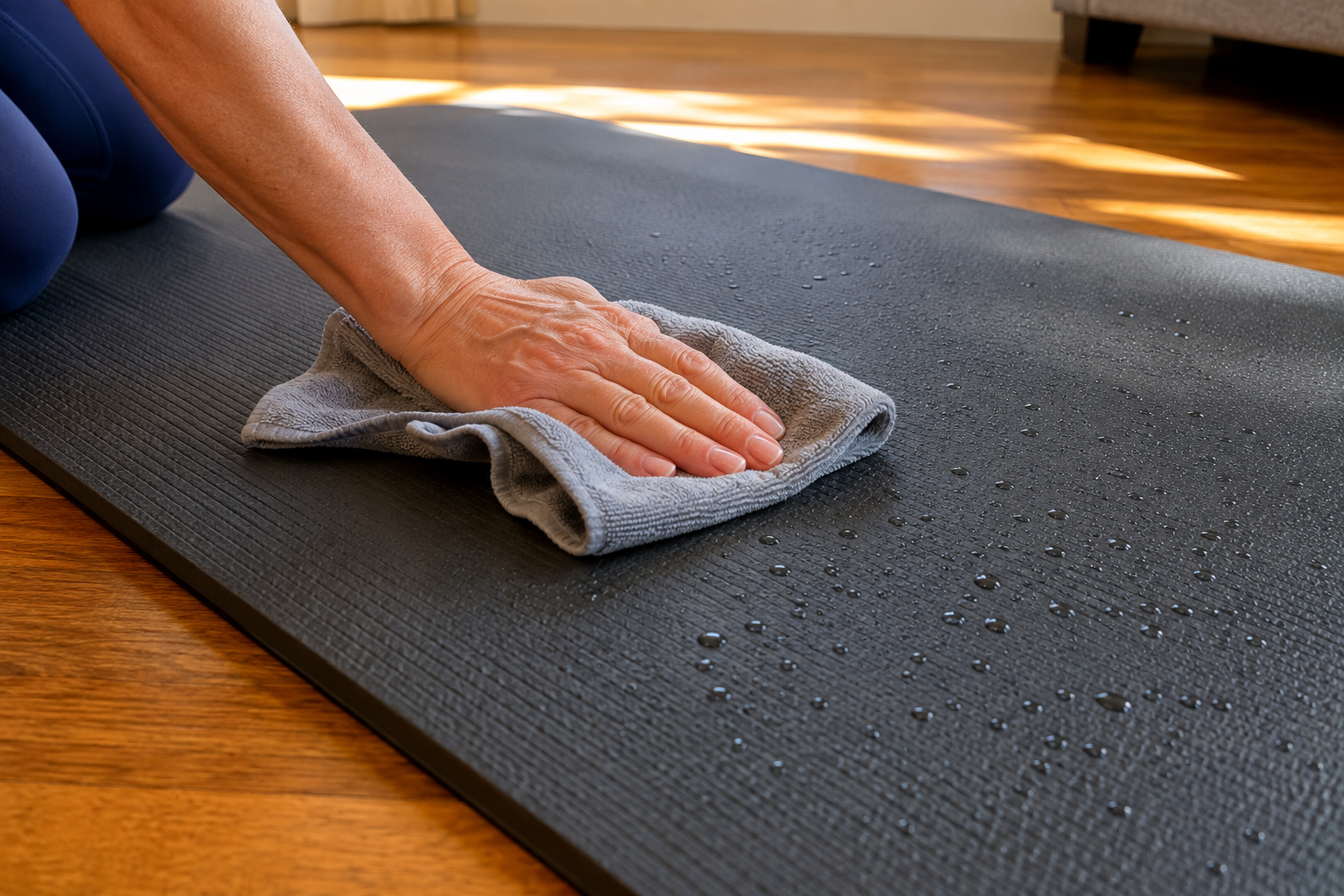
Easy cleaning. A closed-cell surface wipes down with mild soap and water and doesn’t soak up sweat. This matters more than people think, because a mat that’s a chore to clean becomes a mat that smells, and a mat that smells becomes a mat in the closet.
So Which Yoga Mats Are Worth Buying?
Here are my four picks. I’ve kept them as types rather than brand names, because the specific listings change all the time, but each one links to the version my research landed on.
Best Overall: A 6mm High-Density Mat with a Textured Non-Slip Surface. This is the one I’d point most people to. High-density foam means it cushions without letting your hands and knees sink to the floor, and the textured surface keeps you planted mid-stretch. It’s thick enough for comfort, firm enough for balance work, and priced where a “why not” purchase should be. See 6mm high-density non-slip yoga mats on Amazon.
Best for Sensitive Knees: An Extra-Thick 8 to 10mm Cushion Mat. If kneeling is the thing that keeps you off the floor, this is your answer. The extra thickness takes the bite out of hardwood and tile, which makes stretches and floor exercises you’d normally cut short suddenly doable. The tradeoff is a little less stability for standing balance moves, but for a mostly-on-the-floor routine, that’s a trade worth making. See extra-thick 8 to 10mm cushion yoga mats on Amazon.
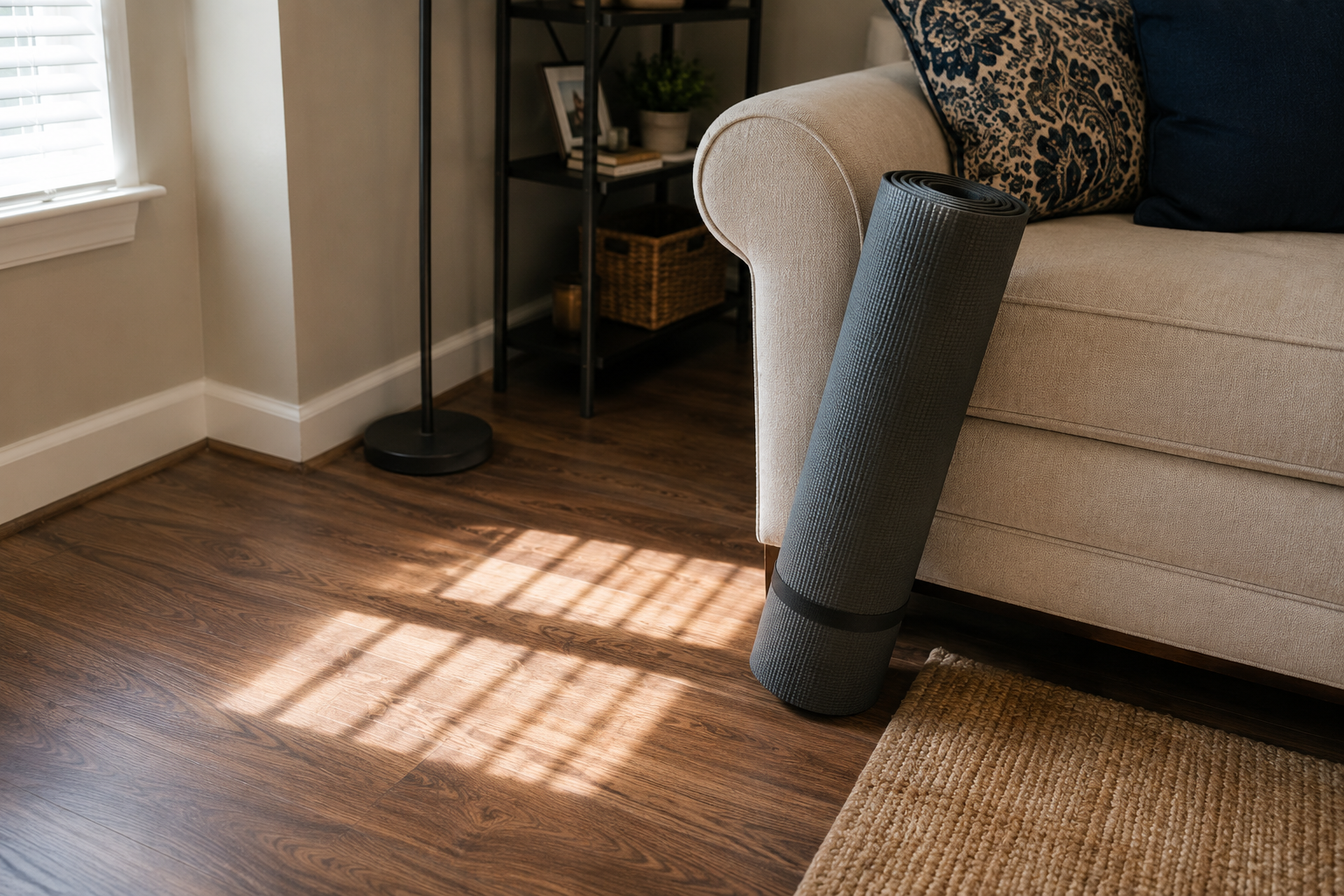
Best Budget: A Basic 6mm Foam Mat. No frills, and that’s fine. A simple 6mm foam mat gives you the cushion and the dedicated workout spot for about the price of a large pizza. It won’t have the premium grip or the durability of the pricier options, but if you’re not sure this habit will stick, start here. Upgrade later if you wear it out. Wearing out a mat is a good problem. See budget 6mm foam yoga mats on Amazon.
Best for Sweaty Hands or Hot Rooms: A Polyurethane-Top Grip Mat. Some folks have sweaty palms, and some folks work out in a warm garage or sunroom. A polyurethane top layer actually grips better when it’s damp, which is the opposite of standard foam. It costs more and needs a wipe-down after each use, but if slipping has ever ended a workout early, this fixes it. See polyurethane-top grip yoga mats on Amazon.
How Would I Choose?
Keep it simple. If your knees complain, get the extra-thick mat and don’t look back. If you sweat a lot or your workout space runs warm, get the polyurethane top. If you’re testing the waters, the budget mat is plenty. Everyone else, take the 6mm high-density overall pick and be done with it.
And remember the mat is step one, not the whole plan. I’ve written before about how to stay active after 40 and whether a walking pad is worth it, and the honest theme across all of it is the same: consistent, low-impact movement beats heroic, occasional workouts every time. Pair the movement with good food and, if it fits your routine, the healthy aging supplements I’ve covered, and you’ve got a real foundation.
FAQs
Do I need a yoga mat if I don’t do yoga?
That’s exactly who this post is for. If you stretch, do core work, or do any exercise on the floor, a mat makes it comfortable enough that you’ll actually keep doing it. The yoga part is optional. I’m living proof.
Is a thicker yoga mat always better?
No. Thicker means more cushion, but past about 10mm you start to wobble on standing moves and balance work. For most low-impact home workouts, 6mm is the sweet spot, and 8 to 10mm is for sensitive knees.
How do I clean a yoga mat?
Wipe it down with mild soap and warm water, then let it air dry flat before rolling it up. Skip the harsh cleaners, they can break down the surface. A quick wipe once a week keeps it fresh.
What’s the difference between a yoga mat and an exercise mat?
Mostly thickness and firmness. Exercise mats tend to be thicker and softer for floor work, while yoga mats are firmer for grip and balance. The 6mm+ mats in this post sit in the overlap, which is why they work so well for low-impact routines.
Final Thoughts
I came into this research as a skeptic and came out a believer, not in yoga necessarily, but in the humble mat. For the price of a dinner out, you get a more comfortable floor, a dedicated spot to move, and one less excuse between you and the stretching you already know you should be doing. My knees took years of concrete floors at the flea market. They’ve earned the cushion. Yours have too.
Take a look at what else I recommend, and why I picked it.
