
Published
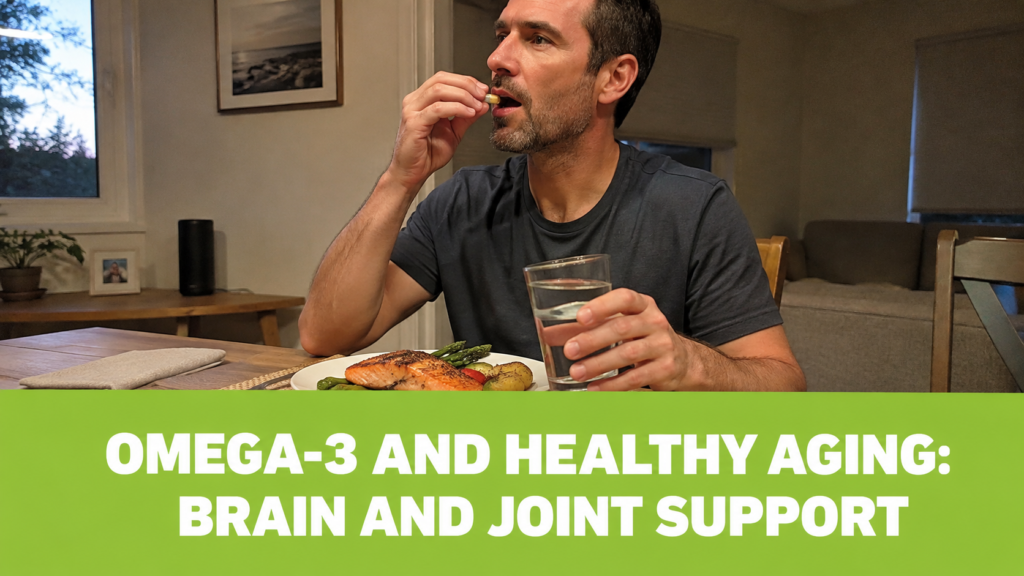
The link between omega-3 and healthy aging comes down to two fatty acids, EPA and DHA, that your body cannot make enough of on its own. Research keeps connecting them to brain health and joint comfort as we get older, which is exactly why they earned a spot in my evening stack.
September is Healthy Aging Month, and this is the second deep-dive in my series on aging well. Last time we covered the big picture in my healthy aging supplements guide. Today we are zooming in on one nutrient family that shows up in almost every honest conversation about staying sharp and staying mobile.
Let’s Break It Down
Omega-3s are a family of fats your body uses as building material. The two stars are EPA and DHA. Both come mainly from fish and other seafood.
DHA is a big structural piece of your brain. A meaningful chunk of the fat in your brain is DHA, and your body uses it to build and maintain the cells you think with.
EPA works more behind the scenes. Your body uses it to make compounds involved in the normal processes that keep joints and tissues feeling comfortable after a long day.
There is a third omega-3 called ALA that comes from plants like flaxseed and walnuts. It is good stuff, but your body converts only a small fraction of it into EPA and DHA. That is why fish gets all the attention.
Why Can’t Your Body Just Make Its Own?
Here is the honest answer: your body is great at making most fats, but it does not have the machinery to build omega-3s from scratch. They are what scientists call essential fats, which is a fancy way of saying you have to eat them.
That was news to me when I started researching all this after my 2024 health scare. I figured the body handled everything if you just ate “pretty healthy.” Turns out some nutrients only show up if you put them on your plate on purpose.
How Might Omega-3s Support Your Brain as You Age?
Your brain never stops needing raw materials. DHA is one of the main ones, and researchers have spent decades looking at how omega-3 intake relates to memory, focus, and long-term brain health in older adults.
The findings are encouraging without being magic. People who regularly eat omega-3 rich fish tend to show patterns researchers like to see. That does not mean fish oil makes anyone smarter. It means keeping your intake steady may support the brain you already have as the years add up.
I think about it like maintaining my woodworking tools. Nothing dramatic happens on any single day I oil them. But over the years, the maintained tools are the ones still working smoothly.
What About Joints and Heart Health?
Joint comfort is the other area research keeps circling. EPA in particular feeds into the body’s normal comfort and recovery processes, and studies have linked steady omega-3 intake with everyday joint comfort in active older adults.
I care about this one personally. Between the gym three times a week, gardening, and long weekends standing at my flea market booth, my joints earn their keep. Anything that may help them stay comfortable gets my attention. If staying mobile matters to you too, my post on staying active after 40 pairs well with this one.
And then there is heart health, probably the most studied area of all. Omega-3s are one of the few supplement ingredients with decades of research behind them, and much of it centers on how EPA and DHA may support a healthy heart as part of an overall healthy lifestyle.
Do You Actually Need a Supplement?
Maybe not, and I want to be straight with you about that.
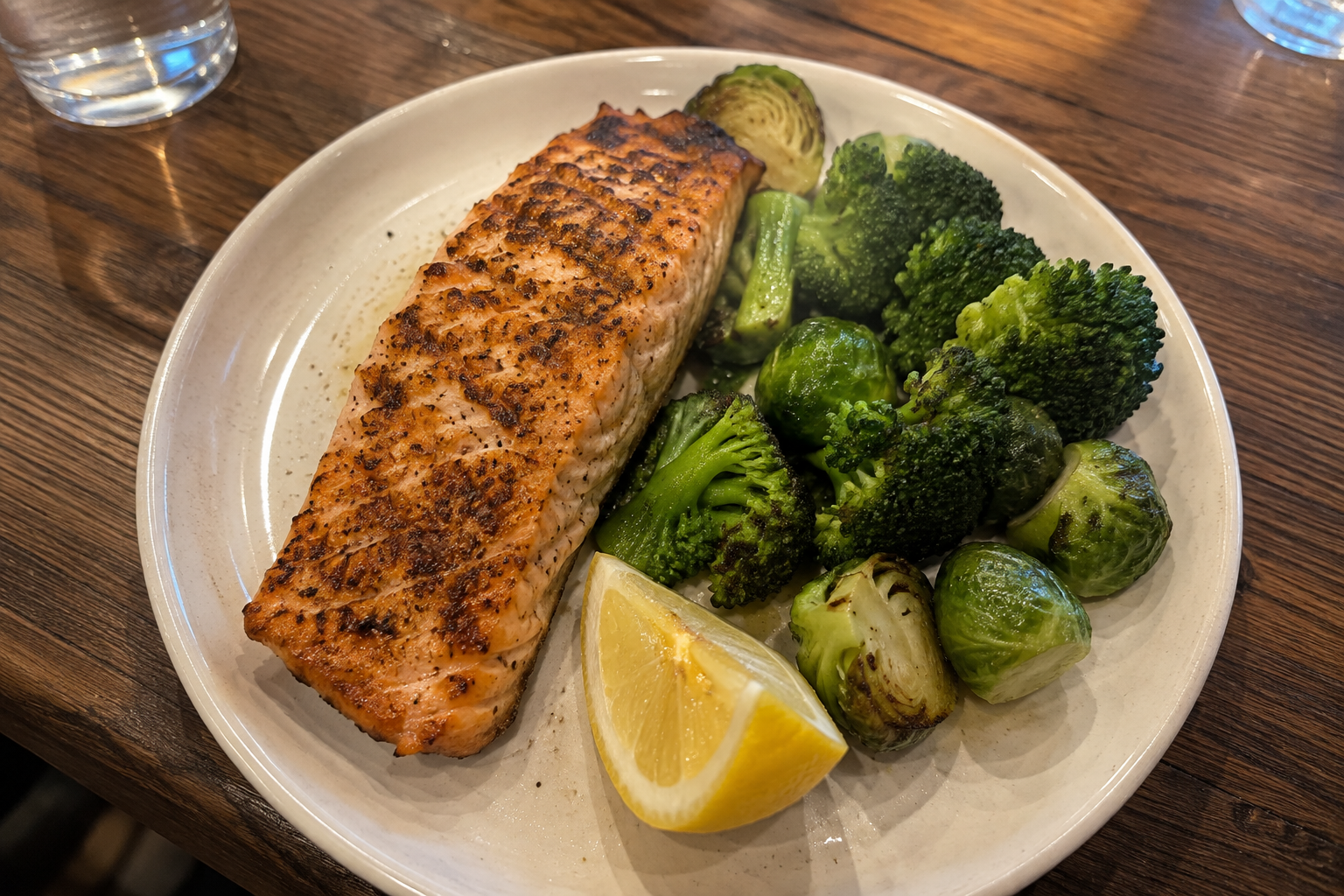
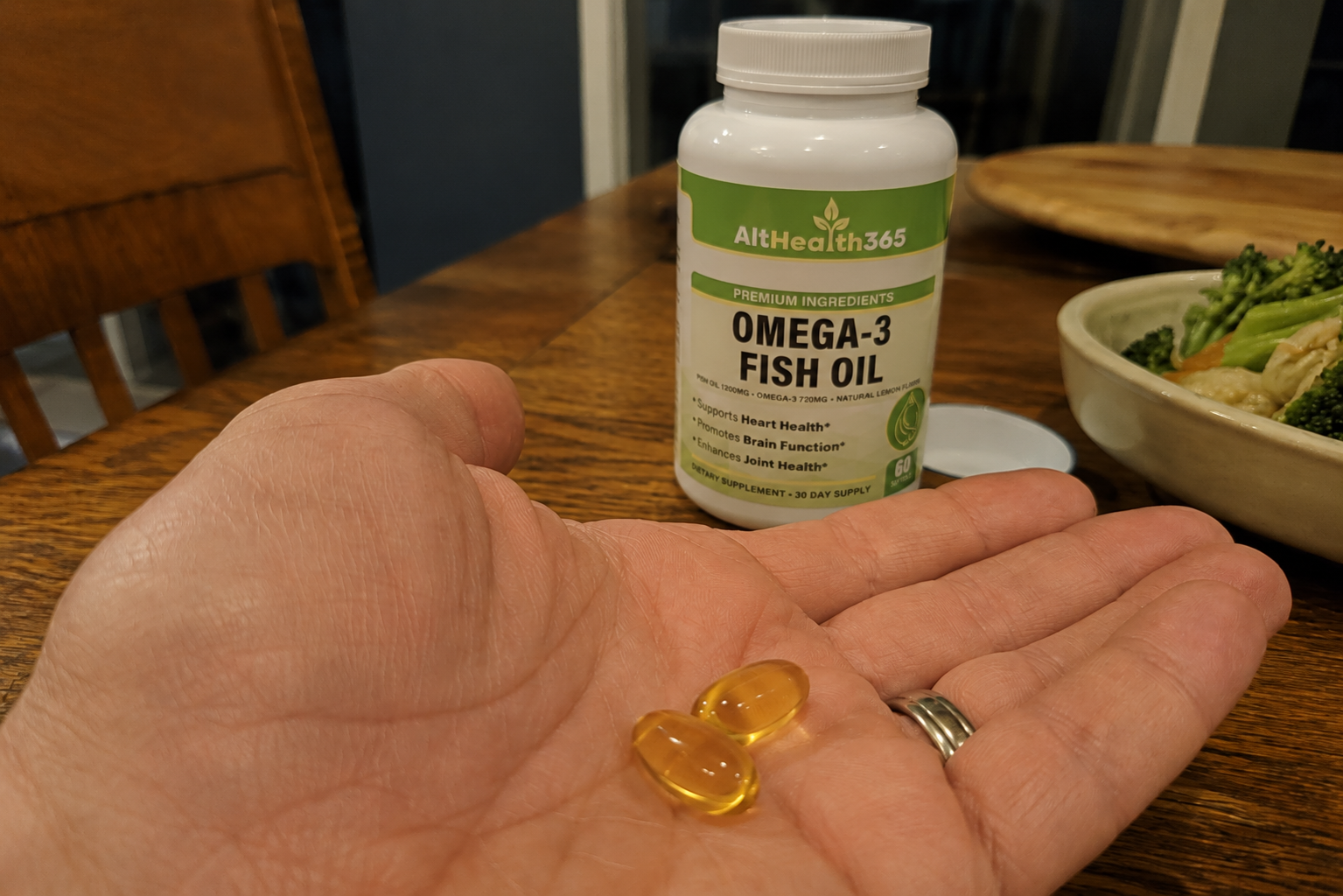
If you eat fatty fish like salmon, sardines, or mackerel twice a week, you are likely covering your bases already. Food first, always. A plate of grilled salmon brings protein and other nutrients no capsule can match.
The supplement conversation is for the rest of us. I like fish fine, but I do not reliably eat it twice a week, every week, all year. Between the garden, the booth, and running this business solo, my dinners lean heavily on steak, eggs, and whatever the garden hands me. A fish oil softgel fills the gap the honest way, consistently, without pretending my diet is something it is not.
What the Research Says
Research on brain health: Studies have linked higher omega-3 intake, especially DHA, with patterns of healthy brain aging in older adults. Researchers note that DHA is a major structural fat in the brain, which may explain why steady intake may support long-term brain health (source: NIH Office of Dietary Supplements).
Research on joint comfort: Multiple studies suggest EPA and DHA may help support everyday joint comfort and normal recovery after activity. The research is strongest for people who take omega-3s consistently over months, not days (source: NIH).
Research on heart health: Decades of research have linked regular intake of EPA and DHA with markers of heart health, which is why health authorities encourage eating fatty fish regularly. Omega-3s may support a healthy heart as part of a balanced diet and active lifestyle (source: American Heart Association).
How Do You Choose a Good Fish Oil?
This is where a lot of people get tripped up, so here is the practical stuff.
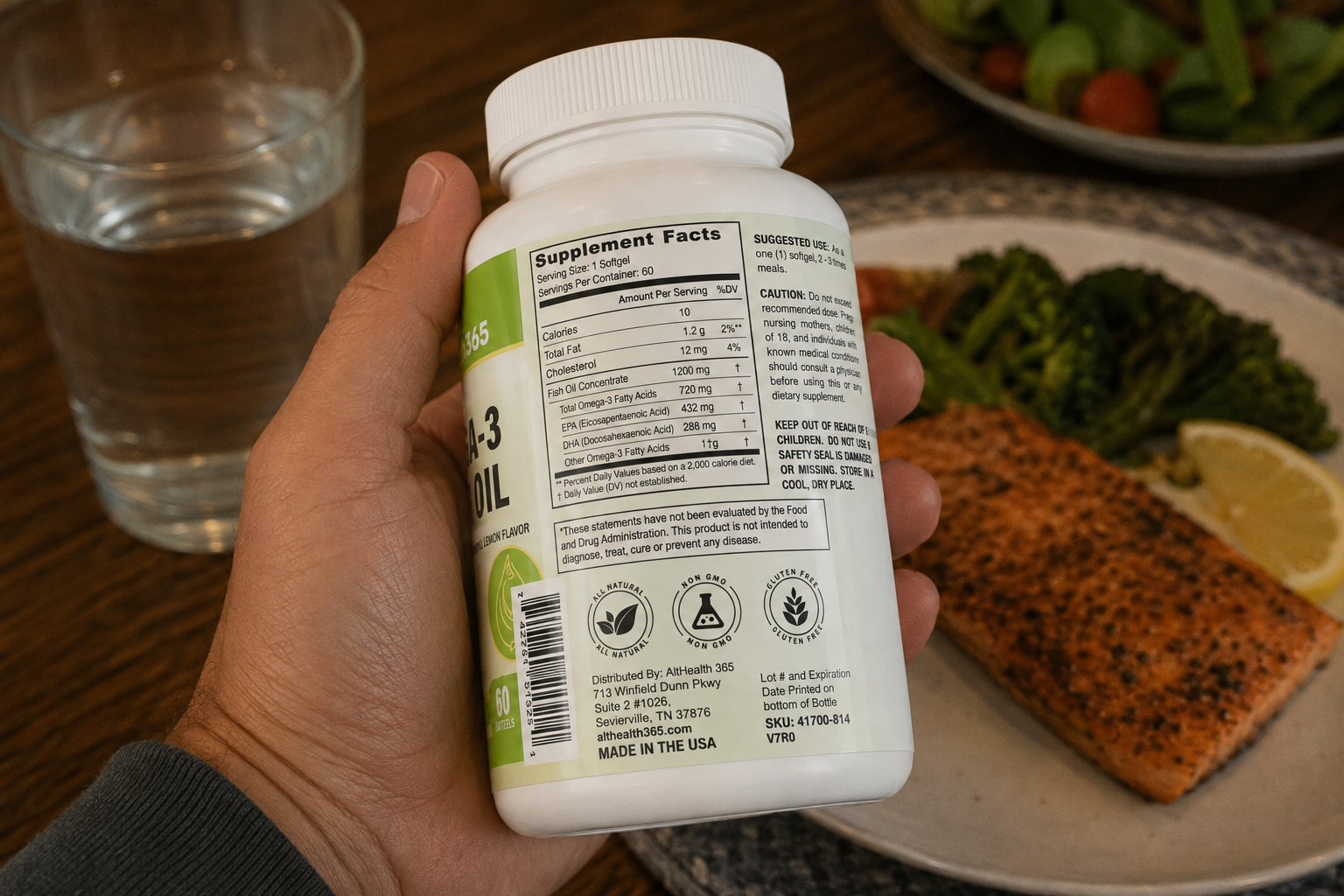
Read the EPA and DHA numbers, not the front label. A bottle can shout “1,000 mg fish oil” while only delivering 300 mg of actual EPA and DHA combined. Flip it over. The EPA and DHA amounts on the supplement facts panel are the only numbers that matter.
Check for freshness. Fish oil can go rancid, and rancid oil smells and tastes like it. Buy from a company that tests for purity and freshness, keep the bottle out of heat and sunlight, and if a softgel ever smells strongly fishy when you open the bottle, trust your nose.
About those fish burps. The most common complaint with fish oil is the burps, and there are two easy fixes. Take your softgels with a meal, not on an empty stomach. And if that is not enough, keep them in the freezer. A frozen softgel breaks down further along in digestion, and for most people that ends the problem completely.
Where Omega-3 Fits in My Routine
Our Omega-3 Fish Oil ($24.99) is part of my evening stack, right alongside Magnesium Glycinate and Turmeric with Ginger. Evenings work for me because I always take it with dinner, which handles the burp issue and makes it a habit I do not have to think about.
It has also become my go-to replacement pick. When I retired a couple of older products from the lineup, this is the one I pointed people toward instead, because the research behind it is deeper than almost anything else on my shelf.
If you want to see how it fits into a bigger picture, my healthy aging supplements guide covers the full lineup, and my post on magnesium and longevity digs into its evening stack partner.
These statements have not been evaluated by the Food and Drug Administration. This product is not intended to diagnose, treat, cure, or prevent any disease.
FAQs
What is the difference between omega-3 and fish oil?
Omega-3s are the nutrients, and fish oil is the delivery vehicle. Fish oil is simply oil from fish that contains EPA and DHA. When you compare products, compare the EPA and DHA amounts, not the total fish oil.
Can I get enough omega-3s without eating fish?
Plant foods like flaxseed and walnuts provide ALA, but your body converts only a small amount of it into EPA and DHA. If you do not eat fatty fish about twice a week, a fish oil supplement is the most reliable way to close the gap.
When is the best time to take fish oil?
Whenever you will actually remember it, with a meal that contains some fat. I take mine with dinner as part of my evening stack. Taking it with food helps absorption and cuts way down on fish burps.
How long does it take to notice anything?
Omega-3s are a slow and steady nutrient. Your body builds its stores over weeks and months of consistent intake, so think of it as a long-term habit, not a quick fix.
Final Thoughts
Omega-3s are not flashy. They are maintenance, the nutritional version of oiling your tools and sharpening your blades. EPA and DHA may support your brain, your joints, and your heart, and those are exactly the three things I want working well for the next forty years.
Eat the salmon and sardines if you will actually do it. If you are like me and you will not, a quality fish oil taken with dinner is a simple, honest backup plan.
If this helped you, share it with someone who needs it.
