

Published · Updated
The honest answer on magnesium and longevity is this: magnesium is not a magic pill, but it quietly supports hundreds of processes your body leans on to age well, from sleep to muscle function to heart health. Researchers keep studying it because many adults simply do not get enough, and adequacy matters more as the years add up.
September is Healthy Aging Month, and I wanted to kick it off with the supplement I would grab first if someone made me pick just one. Not the flashiest one. The boring, dependable one. Magnesium.
Let’s Break It Down
Magnesium is a mineral your body uses constantly and never announces. It plays a role in more than 300 enzyme processes, which is a fancy way of saying it helps your body do the everyday work of being alive. Turning food into energy. Helping muscles contract and relax. Keeping nerve signals firing the way they should.
It also supports normal sleep quality, which might be the piece most of us actually feel day to day. When magnesium runs low, a lot of small things can start feeling a little off, and it is rarely obvious that a mineral is the reason.
That quiet, everywhere-at-once role is exactly why it shows up in so many conversations about aging well.
Why Do Researchers Keep Looking at Magnesium and Aging?
A few reasons keep coming up in the research, and none of them are magic. They are all maintenance.
Sleep. Deep, consistent sleep is one of the most underrated pieces of healthy aging, and magnesium plays a part in the systems that help your body wind down at night. Poor sleep makes everything else harder, from energy to mood to recovery.
Muscle maintenance. Keeping your muscles working matters more with every decade. Magnesium is involved in normal muscle function, both the contracting and the relaxing. Anyone who has been jolted awake by a calf cramp knows the relaxing part is not optional.
Heart health. Your heart is a muscle that never takes a day off, and magnesium helps support normal heart rhythm and overall heart health. Researchers have spent years looking at how magnesium levels relate to how well hearts hold up over time.
The gap. Here is the part that ties it together. National survey data suggests a large share of American adults do not get the recommended amount of magnesium from food alone (source: NIH Office of Dietary Supplements). So the research interest is not really “magnesium makes you live longer.” It is “a lot of people are short on something their body needs every single day, and that adds up.”
What the Research Says
I always want to be straight with you about what the science actually shows, so here are a few honest summaries.
Intake and healthy aging. Observational research has linked higher magnesium intake with markers of aging well, including healthier hearts and better metabolic function. These are associations, not proof, but the pattern has shown up often enough that scientists keep digging (source: NIH Office of Dietary Supplements).
Sleep quality. Some studies suggest magnesium may support sleep quality, particularly in older adults with lower intake. The research here is still developing, and results vary, but the connection between magnesium and the body’s relaxation systems is well established (source: NIH).
Muscle function. Research suggests adequate magnesium may help support normal muscle function, and low levels have been linked with muscle cramps and reduced performance in some studies. Again, adequacy is the theme. Getting enough matters. Megadosing does not make you superhuman (source: NIH Office of Dietary Supplements).
Notice the pattern in all three: the research is about having enough, not about magnesium being a fountain of youth. Anyone selling it as a longevity pill is selling something the science does not say.
Where Can You Get Magnesium From Food?
Food first. I will say that with every supplement I ever talk about, because it is true. Some of the best sources are probably already in your kitchen:
Leafy greens like spinach are one of the richest sources. Nuts and seeds, especially almonds, cashews, and pumpkin seeds, pack a lot into a small handful. Whole grains beat refined grains by a wide margin, since processing strips much of the magnesium out. Beans and lentils help too.
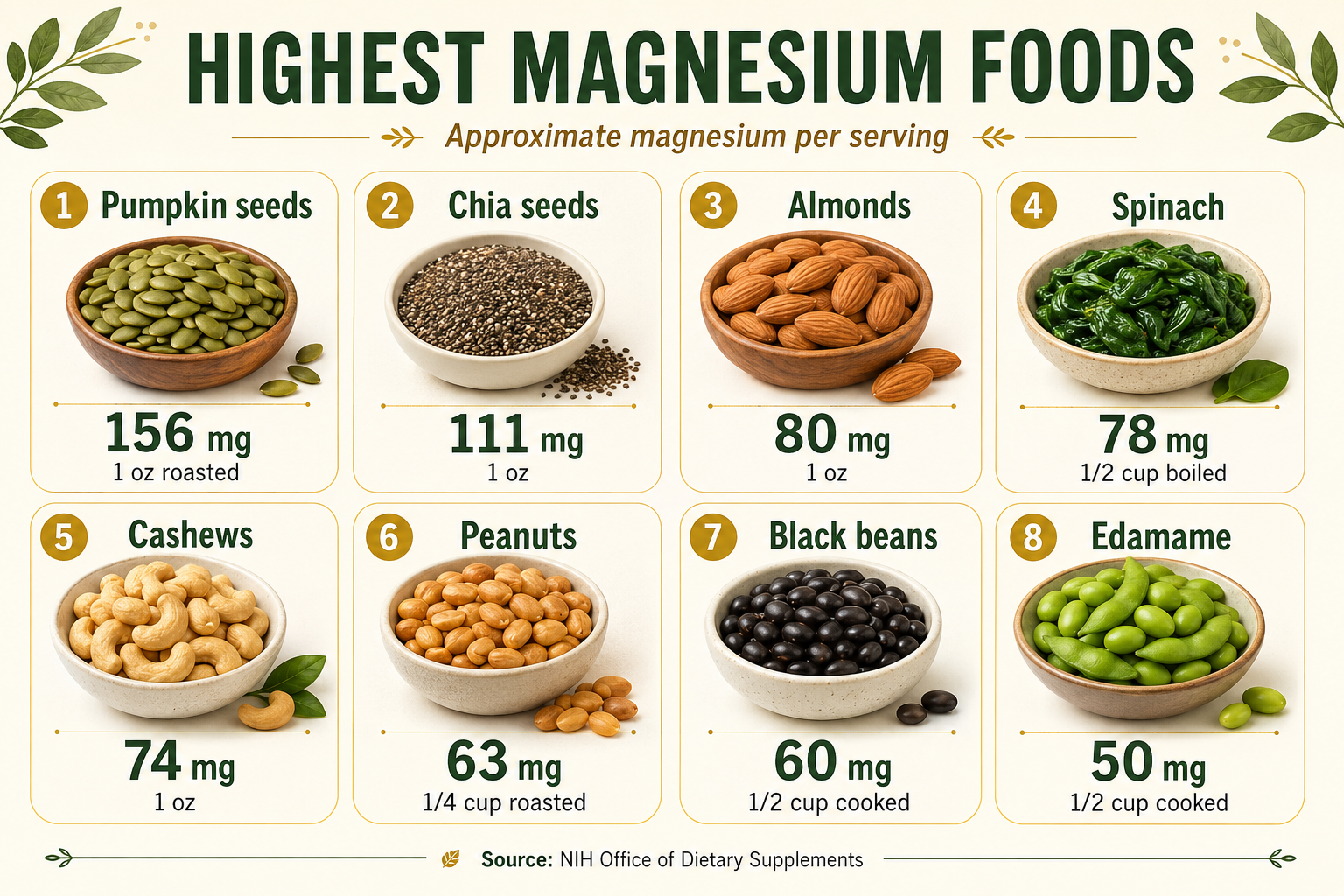
My garden does some of the work for me in summer, and a handful of almonds is an easy habit the rest of the year. But even eating the way I do now, hitting the target from food every single day is harder than it sounds. That is where a supplement earns its spot, filling the gap, not replacing the plate.
Why Do I Take Magnesium Glycinate Specifically?
Not all magnesium supplements are created equal, and the form matters more than most people realize.
Magnesium glycinate is magnesium bound to glycine, an amino acid. That pairing makes it gentle on the stomach, which is a real advantage. Some other forms are famous for sending people sprinting to the bathroom, and that is not a habit anyone sticks with.

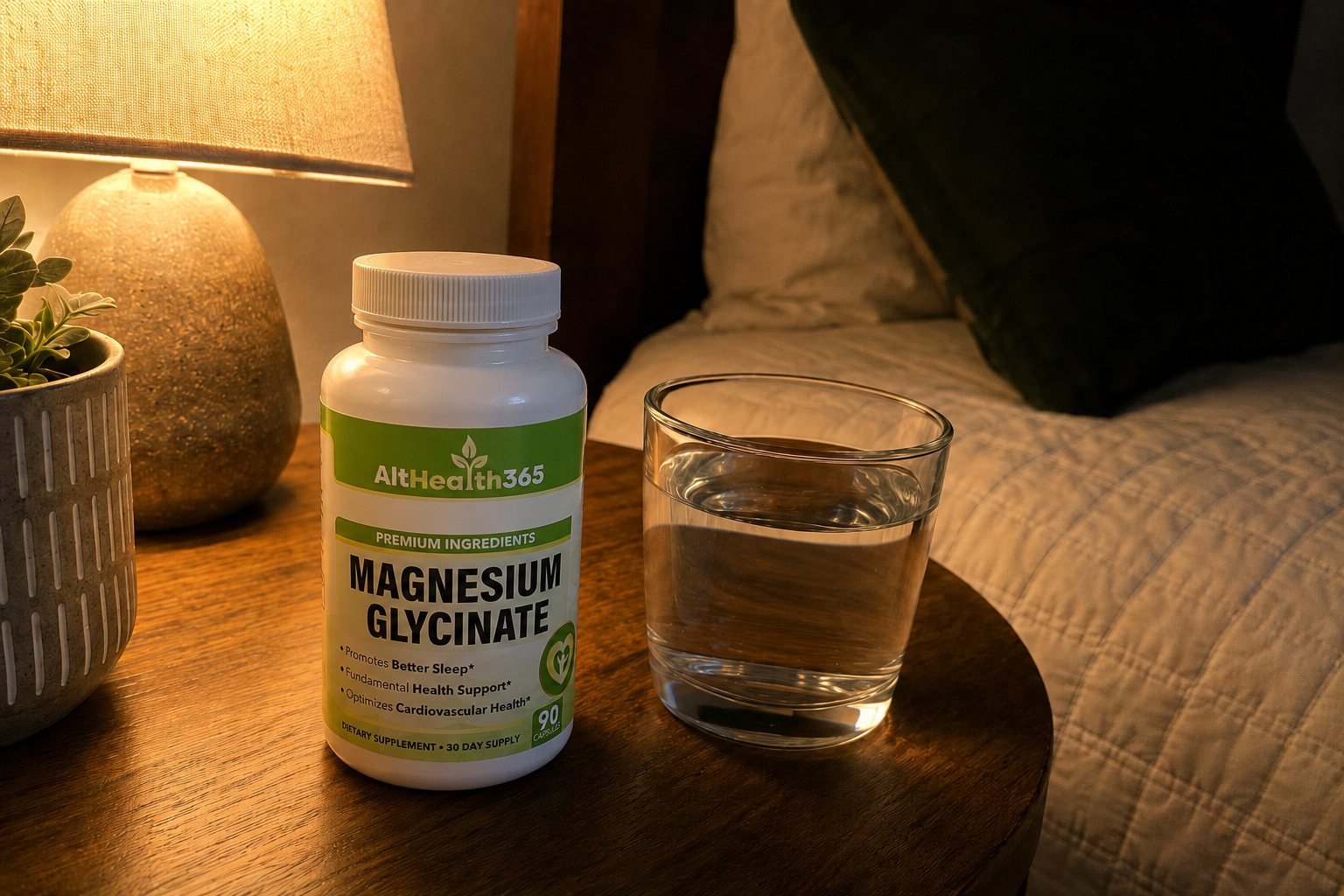
Glycinate is also evening-friendly. Glycine itself is associated with relaxation, so it fits naturally at the end of the day. Our Magnesium Glycinate 275mg ($22.99) is part of my evening routine alongside my omega-3, and it has been for a long time now.
Here is the truest thing I can tell you about it: if I skip it for a few days, I feel it. Choppy sleep, tighter muscles. It is one of the few supplements where the difference is obvious enough that I do not need a study to convince me to restock. The research just helps explain what I was already noticing.
If you are building out a bigger routine for this season of life, I put together a full guide to healthy aging supplements, plus a deeper look at omega-3 and healthy aging. And since aging well starts deeper than most people think, my post on why immune health starts in the gut is worth your time too.
So Is Magnesium a Longevity Pill?
No. And I want to be clear about that, because Healthy Aging Month brings out a lot of overpromising.
No supplement adds years to your life on its own. What the research suggests is simpler and more believable: your body needs adequate magnesium to do its daily maintenance well, many of us run short, and closing that gap may support the things that actually drive aging well. Sleep. Muscles that work. A heart that is taken care of.
I lost 77 lbs after a 2024 health scare, and none of it came from one pill. It came from whole food, routine, and stacking small boring habits until they added up. Magnesium is one of those small boring habits. That is the highest compliment I can give a supplement.
These statements have not been evaluated by the Food and Drug Administration. This product is not intended to diagnose, treat, cure, or prevent any disease.
FAQs
How much magnesium do adults need each day?
Most adults need roughly 310 to 420 mg per day depending on age and sex (source: NIH Office of Dietary Supplements). Food should cover as much of that as possible, with a supplement filling in the rest if needed.
When is the best time to take magnesium glycinate?
There is no official rule, but evening works well for a lot of people, me included. Glycinate is gentle and pairs naturally with a wind-down routine. The best time is honestly whatever time you will remember consistently.
Can you get too much magnesium?
From food, that is very unlikely. From supplements, taking well above the recommended amounts can cause digestive upset. Stick to the label, and if you have kidney issues or take medications, talk with your doctor first.
Will magnesium help me live longer?
Nobody can honestly promise that. The research links adequate magnesium with markers of aging well, like sleep quality, muscle function, and heart health. Think of it as supporting the foundation, not adding floors to the building.
Final Thoughts
Aging well is not one big decision. It is a thousand small ones, and getting enough magnesium is one of the easiest on the list. Load your plate with greens, nuts, seeds, and whole grains first. If there is still a gap, a gentle form like magnesium glycinate may help you close it without drama.
That is the whole pitch. No miracle, just maintenance done consistently. In my experience, that is what actually works.
If this helped you, share it with someone who needs it.
