

Published · Updated
Magnesium is involved in over 300 enzymatic processes in the body, and a meaningful share of them touch the cardiovascular system: normal muscle function including the heart muscle, nerve signaling, and maintaining a steady rhythm of daily function. That is why magnesium and heart health keep showing up in the same sentence in research. Here is the plain English version of the connection, what the science actually suggests, and how I use it.
What Does Magnesium Actually Do in the Body?
Think of magnesium as backstage crew rather than the star. It does not perform; it makes performances possible. Muscle contraction and relaxation, including cardiac muscle, depend on magnesium trading places with calcium in a constant chemical rhythm. Nerve impulses, energy production at the cellular level, and hundreds of enzyme reactions all pull magnesium off the shelf.
The catch: your body does not manufacture magnesium. Every milligram arrives through food, and national dietary surveys consistently show a large share of Americans do not reach the recommended intake from diet alone. The heart never stops working, which makes its supporting crew a poor place to run short.
What Does the Research Suggest About Magnesium and Heart Health?
The most consistent findings are associations: populations with higher magnesium intake, from food especially, tend to show better markers across several areas of cardiovascular health. Research also links adequate magnesium status with normal muscle function and with sleep quality, and sleep itself is an underrated pillar of heart health (see the current research on PubMed).
The honest limitations, because you deserve them: association studies cannot prove magnesium causes better outcomes, supplementation trials show mixed results depending on dose, form, and who is being studied, and people with kidney conditions or on certain medications need medical guidance before supplementing. Magnesium is a support, not a treatment, and anyone selling it as heart medicine is out of bounds.
Which Foods Are Actually High in Magnesium?
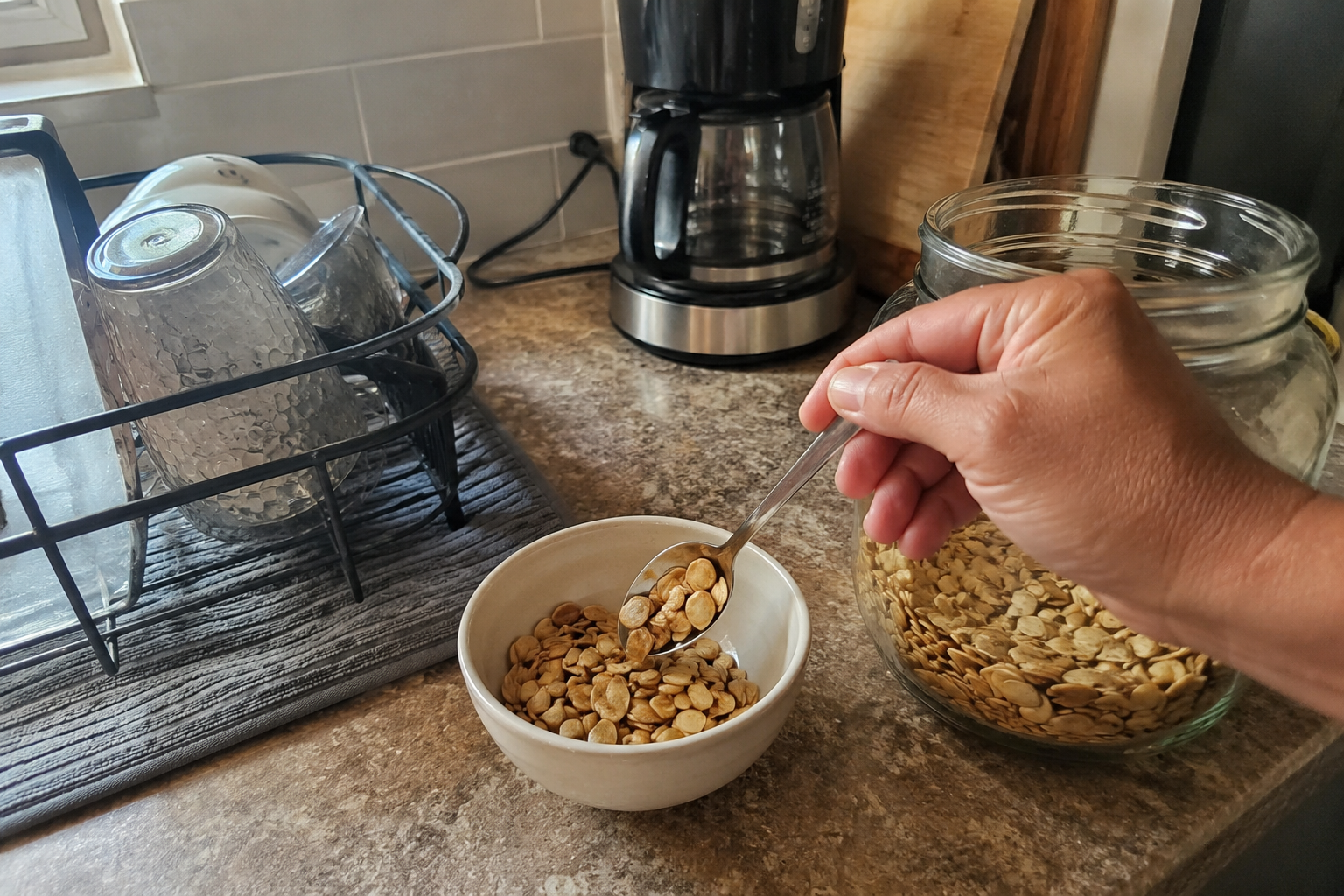
Real food first, always. The best sources read like a clean eating list on purpose: pumpkin seeds, almonds, spinach and dark leafy greens, black beans, brown rice, oats, and even dark chocolate in reasonable amounts. If you have been following along with my grocery list from last week, you are already buying half of these.
This is my standard order of operations: fix the plate first, then let a supplement cover the gap between a good diet and a great intake. That order matters both for results and for honesty.
How Do I Personally Use Magnesium?
Evenings, as part of my wind-down routine. I take Magnesium Glycinate, the form bound to glycine, which is known for being gentle on the stomach compared to some other forms. It may help promote better sleep, may help support normal muscle function, and may help support cardiovascular health as part of an overall routine.
The sleep angle is honestly where I notice it most, and that loops right back to the heart conversation: sleep is when blood pressure naturally dips and the cardiovascular system takes its nightly breather. Supporting the sleep supports the system. That is the whole quiet logic of my evening stack.

Research Box: What the Research Says
Observational research associates higher magnesium intake with favorable cardiovascular markers, and controlled trials support magnesium’s role in normal muscle and nerve function (see the current research on PubMed). The honest limitation: supplementation trial results vary by population and dose, and dietary magnesium shows stronger associations than supplements alone, which is exactly why food comes first.

Frequently Asked Questions
Which form of magnesium is best?
It depends on the goal. Glycinate is popular for evening routines and gentle digestion. Citrate absorbs well but can loosen digestion. Oxide is cheap but poorly absorbed. I compared them all in my forms post if you want the full breakdown.
Can you take too much magnesium?
From food, virtually never for healthy people. From supplements, yes, digestive upset is the common early sign. Follow label doses and talk with your doctor, especially with kidney issues or medications in the picture.
When should I take magnesium?
I take mine in the evening because the routine matters as much as the mineral. Consistency beats timing precision.
Does magnesium lower blood pressure?
That framing is stronger than the evidence and stronger than supplement rules allow. Research shows associations with normal cardiovascular function. Blood pressure concerns belong with your doctor.
Final Thoughts
Magnesium is not exciting, and that is exactly the point. Heart health is mostly the accumulation of unexciting support: the walk, the vegetables, the sleep, the minerals quietly doing backstage work. Get the food sources in, consider the supplement if there is a gap, and keep the whole thing in its proper lane: support, sustained daily, for years.
If you want to see what else I keep in my own cabinet, take a look around the site.
These statements have not been evaluated by the FDA. This product is not intended to diagnose, treat, cure, or prevent any disease.
