
Published · Updated
When you are weighing omega-3 for heart health, EPA and DHA are the two omega-3 fatty acids your body actually uses from fish oil, and they split the work: EPA is most associated in research with supporting the body’s normal inflammatory balance, while DHA is a structural fat concentrated in the brain, eyes, and cell membranes, including in cardiac tissue. Most quality fish oils contain both. Here is what each one does, what the research suggests, and how to read a label so you know what you are actually buying.

What Exactly Are EPA and DHA?
Long-chain omega-3 fatty acids, the marine kind. Your body can technically manufacture small amounts from the plant omega-3 ALA found in flax and walnuts, but the conversion rate is famously poor, single digit percentages in most research. That is why fish, and fish oil, sit at the center of the omega-3 conversation: they deliver EPA and DHA directly, no inefficient conversion required.
Functionally, think of EPA as more of a signaling molecule, involved in the pathways your body uses to manage its normal inflammatory responses, and DHA as more of a building material, woven into the physical structure of cell membranes where flexibility matters, which very much includes the cardiovascular and nervous systems.
What Does the Research Suggest About Omega-3 for Heart Health?
The strongest and most consistent finding across decades of research is this: populations that eat fish regularly show better cardiovascular outcomes, which is why fish-forward eating patterns anchor most heart-healthy dietary guidance. For supplements specifically, research associates EPA and DHA intake with several markers of normal cardiovascular function, including triglyceride levels already within normal range, and omega-3s remain among the most studied supplements in existence (see the current research on PubMed).
The honest limitations: supplement trial results have been genuinely mixed across large studies, with outcomes varying by dose, population, formulation, and baseline fish intake. Omega-3s may support heart and brain function as part of an overall routine. They are not a substitute for the eating pattern, the movement, or anything your doctor prescribes. Anyone who frames fish oil as heart treatment has left the reservation.
How Do You Read a Fish Oil Label Properly?
This is where most people get taken, so here is the trick: ignore the big number on the front and find the EPA and DHA lines on the back panel.
A bottle can shout 1,200mg of fish oil while delivering only 300mg of combined EPA and DHA, because fish oil is not all omega-3s. The front number measures the oil. The back panel measures the part you are buying it for. Add EPA plus DHA and judge the product on that total and its cost per serving.
Check what any available test report covers and whether its lot matches the bottle. The label on our Omega-3 Fish Oil lists 432mg EPA and 288mg DHA per softgel, totaling 720mg of omega-3s from 1200mg of fish oil. Compare those numbers, the serving size and the current bottle price.
Where Does Food Fit Versus the Supplement?
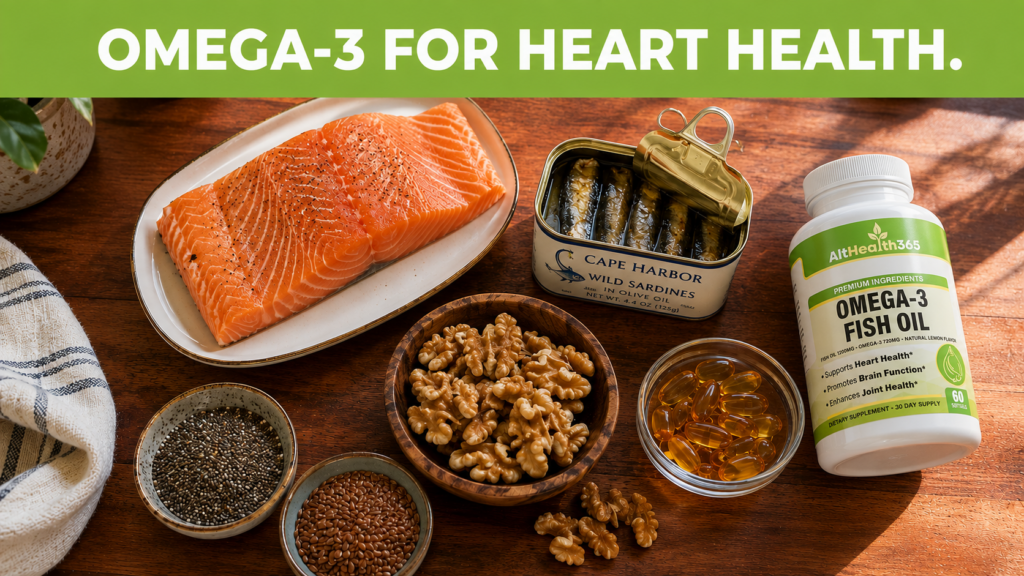
Food first, forever. Salmon, sardines, mackerel, and canned options deliver EPA and DHA wrapped in protein and the rest of the fish’s nutrition. The research consistently reads stronger for fish eaters than for supplement-only patterns, which is exactly why I scheduled fish twice a week in my heart-smart eating overhaul.
The supplement covers the gap between the fish I plan to eat and the fish I actually eat. Some weeks in landlocked Tennessee, that gap is real. That is the honest job description of my fish oil: backup for the plan, not replacement for it.

Research Box: What the Research Says
Decades of observational research associate regular fish consumption with favorable cardiovascular outcomes, and EPA/DHA supplementation research supports roles in normal cardiovascular and cognitive function, with trial results varying by dose and population (see the current research on PubMed). The honest limitation: several large modern trials returned neutral results, and context, especially baseline diet, appears to matter a great deal.

Frequently Asked Questions
Should I choose a high-EPA or high-DHA fish oil?
For general support, a balanced product covering both is the sensible default. Specific ratios for specific goals are a conversation for your doctor, especially if medications are involved.
How much EPA and DHA per day?
There is no single supplement amount that fits everyone. Consider the EPA and DHA in your food as well as the bottle. Follow the current label and discuss your needs with your healthcare provider.
Do omega-3 supplements thin your blood?
At higher doses omega-3s can affect normal clotting function, which is why anyone on blood thinners or heading into surgery needs a doctor’s input first. This is the least skippable FAQ answer I write.
What about algae omega-3 for people who avoid fish?
Legitimate option. Algal oil supplies DHA and increasingly EPA too, and it is where the fish got their omega-3s in the first place.
Final Thoughts
EPA and DHA are a rare supplement story where the underlying food research is genuinely strong and the label games are genuinely common. Eat the fish when you can, read the back panel when you buy, and let omega-3s do what they honestly do: support a heart-smart routine you built out of food, movement, and sleep first.
Want to compare the bottle I sell? View the Omega-3 Fish Oil label and serving details.
If you’re weighing omega-3 for heart health in your real daily routine, here’s what my 2024 health scare taught me about heart health and the eating changes I made after it.
These statements have not been evaluated by the FDA. This product is not intended to diagnose, treat, cure, or prevent any disease.
