
Published · Updated
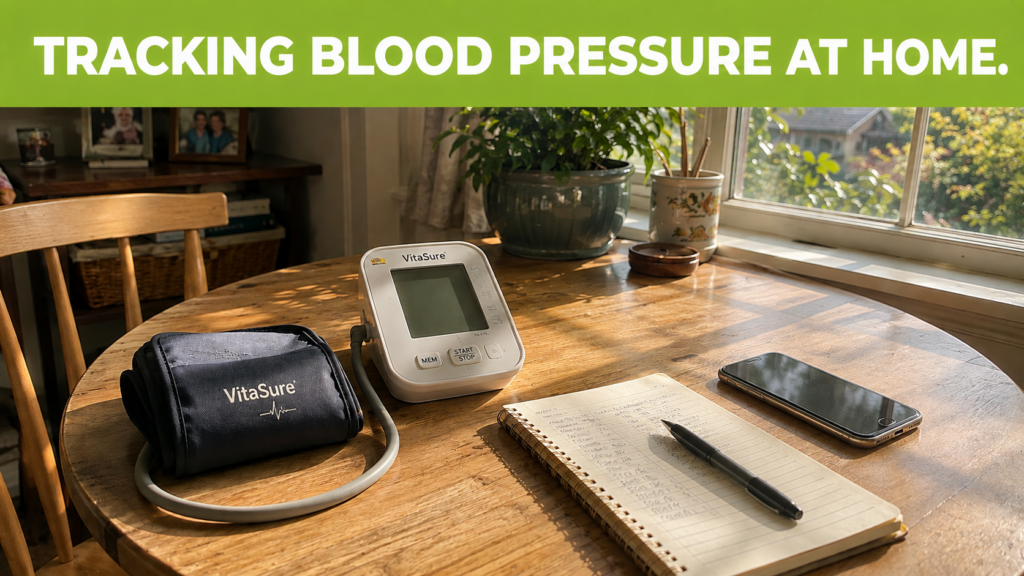
I track blood pressure at home in about four minutes a few mornings a week: same chair, same time, same routine, two readings logged automatically, trend reviewed monthly and shared with my doctor. After my 2024 health scare, home tracking became one of the calmest, most useful habits I own, and it costs less than a tank of gas to start. Here is my exact routine and the mistakes that make home readings worthless.

Why Track Blood Pressure at Home Instead of Just at Checkups?
Because a checkup is one data point taken on a weird day. You drove there, you waited, someone in scrubs is watching, and plenty of people read higher in that chair than they do in their own kitchen. There is a name for that phenomenon, white coat effect, and it is common enough that doctors themselves increasingly want home numbers to see the real picture.
Home tracking flips one stressful reading a year into a calm monthly trend line. And trends are where the truth lives. I learned that lesson on the bathroom scale during my 77 pound loss, and blood pressure works exactly the same way: single readings lie, trends testify.
What Does My Actual Routine Look Like?
A few mornings a week, before coffee, after the bathroom, I sit at the kitchen table with both feet flat on the floor and my back against the chair. I set the cuff on my bare upper arm, rest that arm on the table so the cuff sits at heart level, and then I do the hardest part of the entire routine: nothing, for five minutes. No phone, no rehearsing the day. The dog thinks this is when we commune.
Then two readings, one minute apart, both logged. My monitor syncs to its app automatically, which matters for the same reason smart scales matter: data that logs itself is data that keeps getting collected.
That is it. No drama, no daily obsession, and absolutely no diagnosing myself off one high morning. The readings are for the trend, and the trend is for my doctor.
What Mistakes Make Home Readings Worthless?
The big ones, in rough order of how often I see them:
- Caffeine, exercise, or a cigarette within a half hour of measuring. All three push readings around.
- Talking during the reading, including on the phone. Quiet is part of the measurement.
- Arm hanging at your side or the cuff over a sleeve. Position and skin contact both matter more than people think.
- Crossed legs, unsupported back, perching on a stool. The relaxed-seated posture is not optional decoration; it is part of the standardized conditions the reference numbers assume.
- Checking only when you feel off. That produces a highlight reel of your worst moments, not a trend. Scheduled beats reactive.
- And chasing single readings up or down. One number means almost nothing. The pattern across weeks means nearly everything.
How Do You Make the Numbers Useful to Your Doctor?
Bring the log, not the anecdotes. A month of timestamped readings taken under consistent conditions is genuinely useful clinical information, the kind that helps your doctor see past the white coat effect and the one-off weirdness of any single day.
Ask your doctor three questions to set the whole system up: how often they want you measuring, what range they want to see for you specifically, and at what point they want a call rather than a note at the next visit. Those three answers turn a gadget habit into actual collaborative care. Target numbers and their meaning are entirely your doctor’s department, and the home cuff’s job is to feed that conversation better data.
If you have not bought a monitor yet, my wrist vs upper arm comparison breaks down which models are worth it. Short version: validated upper arm cuff, boring brand, big enough cuff.

Frequently Asked Questions
How often should you check blood pressure at home?
Ask your doctor for your situation. Common patterns run from daily during an adjustment period to a few mornings a week for general awareness. Consistency of conditions matters more than raw frequency.
What time of day is best?
Morning before coffee and medications is a common standard, and some doctors also want an evening reading. Same time, same conditions, whatever schedule you land on.
Why are my home readings different from the doctor’s office?
Frequently because home is calmer, sometimes because of technique or cuff differences. Bring your monitor to a visit once and compare directly.
Should I panic over one high reading?
No. Rest five minutes and reread, then note it and move on. Patterns are the signal. That said, your doctor should tell you in advance what number means call today, so you are never guessing in the moment.
Final Thoughts
My health scare taught me that not knowing my numbers was a choice I had been making by default, every day, for years. Four calm minutes at the kitchen table a few times a week reversed that choice. Get the boring cuff, build the boring routine, and hand your doctor a trend instead of a shrug. Future you says thanks.
Got something like this going on too? Shoot me a message, I’d love to hear it.
The American Heart Association’s guide to understanding blood pressure readings is a good companion while you track blood pressure at home.
These statements have not been evaluated by the FDA. This product is not intended to diagnose, treat, cure, or prevent any disease.
